
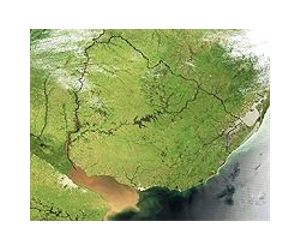
A simmering Argentine-Uruguayan row over a pulp mill in shared waters has ended up in the World Court, causing despair among critics of the two governments who hoped an amicable bilateral solution could have done more for the two countries' relations.
What is worse, analysts said, is Argentina's insistence on having the Finnish-built mill relocated away from the river and also having a scheduled World Court ruling April 20 broadcast live.
Analysts said both demands exacerbate the situation and potentially can create a crisis in which reconciliation is a more logical option. Argentine opponents of the pulp plant, Latin America's largest, argue a crisis already exists and can only be defused by the industry's relocation.
The plant is located near Fray Bentos, an Uruguayan city of 35,000 inhabitants, on the Uruguayan side of the Uruguay River, the major international waterway between the two countries.
Already protest pickets against the pulp mill, originally backed by Argentina's government, have transformed into a defiantly independent militant movement that has hindered traffic across a bridge over the river.
The protesters' increasingly independent stance against Uruguay means it may already be too late for a bilateral accord to have any meaning or to be effective.
The row over the pulp mill isn't new and stems from Argentina's claim that the mill was built by Uruguay without consultation with Buenos Aires under a shared water agreement.
Uruguay argues it informed the Argentine government as required under the accord but independent analysts say Uruguay faces World Court reprimand amid indications it may not have followed the agreement literally enough.
Uruguay's new President Jose Mujica has combined a conciliatory stand toward Argentine President Cristina Fernandez de Kirchner with a populist call to the opposition to close ranks behind the national cause — keeping the pulp mill working as and where it is now.
The Finnish suppliers of the technology, for their part, contest Argentine claims that the Botna plant is ecologically unsound.
Mujica urged opposition political parties to send representatives to The Hague in support of the national delegation.
"It's an idea of President Mujica to have all parties present," said Uruguayan Foreign Affairs Minister Luis Almagro, who is leading the negotiations negotiations. "We have the support of the opposition parties that have considered the initiative very positively," he said.
Uruguay's main opposition National Party is sending a former foreign affairs minister, Sergio Abreu, and the junior opposition Colorado Party Sen. Ope Pasquet, an expert in international affairs.
Almagro said Uruguay will abide by any World Court ruling, although "we will have to adapt our position to the overall international relations with Argentina."
Analysts said public opinion in Latin America currently favored Mujica and would be sympathetic to the Uruguayan cause, even if the outcome wasn't in favor of the country.
Share This Article With Planet Earth
