
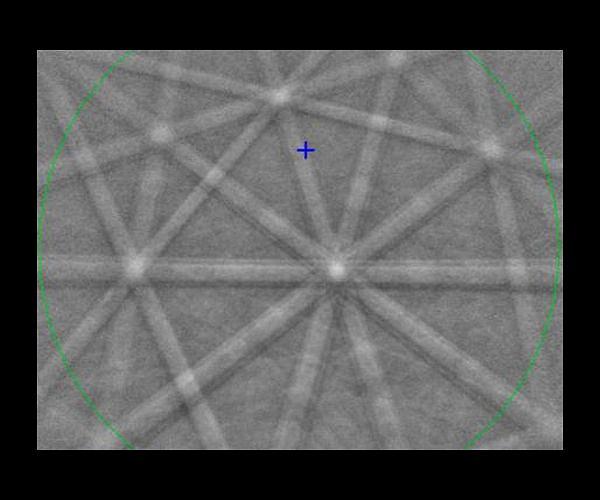
Researchers at the German Aerospace Center (DLR) have achieved a world-first by diffracting a beam of atoms through a solid material. Until now, this had only been accomplished using electrons or neutrons. The experiment demonstrates that atoms, like waves, can form interference patterns when interacting with atomic lattice structures.
This breakthrough opens the door to less destructive analysis methods for studying materials, offering potential applications in nanotechnology, biomedicine, and spacecraft electronics. Unlike electrons, atom beams are electrically neutral and interact with samples more gently, enabling examination of radiation-sensitive substances.
The DLR team accelerated hydrogen and helium atoms in a vacuum chamber to speeds of two million kilometers per hour and directed them through a single-atom-thick graphene membrane. The resulting diffraction patterns provided insights into atomic arrangements. Simulations confirmed that the atoms' quantum states remained intact because the interaction time was only a millionth of a billionth of a second.
Maintaining the membrane's cleanliness and adjusting the atoms' velocity were key to producing distinct diffraction effects. Researchers found that fast-traveling atoms penetrated the graphene with minimal quantum disturbance, creating wavefronts that spread across the solid.
The technique is expected to be especially useful for examining organic materials such as polymer membranes and radiation-sensitive electronic components. Since graphene is one of around 2000 functional two-dimensional materials with unique properties, atomic diffraction could help advance the development of miniaturized devices, including quantum sensors and capacitors for space use.
The experiments also provide a laboratory platform to mimic the harsh particle radiation found in space, such as the solar wind. By replicating these conditions, researchers aim to better understand radiation damage and design materials with greater resistance, particularly for spacecraft electronics.
