
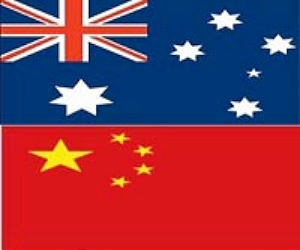
Beijing's complaints about an Australian university publication on China have prompted the centre involved to publish a rebuke against the harassment of academics.
The Australian National University's specialist China centre launched its "China Story Yearbook 2012: Red Rising, Red Eclipse" in August, triggering a visit by Chinese embassy officials the following month.
Australian Centre on China in the World director Geremie Barme, who was overseas when the officials visited, said they had been "objecting to the editorial approach and some of the material" in the book.
He said this visit followed one to Australian officials at the Department of Foreign Affairs and Trade.
But when the Chinese failed to provide written objections or respond to his subsequent correspondence, Barme posted his own letters to the embassy on the centre's website.
"We believe that it is important to act as if the People's Republic had already sloughed off the vestiges of Cold War-era and Maoist attitudes, behaviour and language," he said in an open letter posted on Monday.
In an earlier letter to the embassy in November, Barme wrote that the officials had implied that "there was a feeling that there was evidence of partiality in our Yearbook, or a perceived 'lack of balance'".
He noted that from early October, the China Story Yearbook section of The China Story website had been blocked in China, excepting Hong Kong and Macau, despite previously being readily accessible.
"In this age of openness, exchange and debate, such harassment means that readers in the People's Republic who could meaningfully engage with our work, enhance it and enrich it are deprived of direct access to our material," he said.
"I for one do not see how such a crude interdiction benefits mutual understanding, respect, nor indeed how it can reflect well on the maturing relationship between China and international academic and research communities."
