
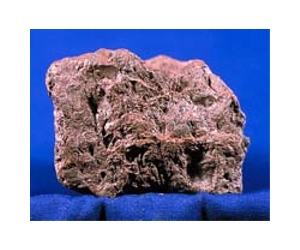
Australia's Fortescue Metals said it has billions of tonnes of iron ore, enough to supply China for decades, reinforcing claims the country is on the verge of a major commodities boom.
Executive director Russell Scrimshaw said the world's fourth largest iron ore miner had up to 20 billion tons of ore, the basic ingredient of the steel that is key to China's mass industrialisation and urbanisation.
He said Fortescue, which is in direct competition with Anglo-Australian giants Rio Tinto and BHP Billiton, has discovered an estimated six billion tonnes in the 10 percent of its vast land-holdings explored so far.
Fortescue exported 40 million tonnes of high-quality hematite iron ore to about 50 major Chinese steel mills in 2009, and plans to ramp up annual production to 150 million tonnes in the next five to 10 years.
"To the Chinese economy we have become very important very quickly," Scrimshaw told a small group of reporters in Perth on Wednesday.
"Six billion tonnes at a production rate of 150 million tonnes a year is a lot of iron ore, many decades (of exports)," he added. "And we think there's as much as 20 billion tonnes in the areas we are looking in."
Australian officials believe the country could be set for decades of growth owing to strong demand for its huge deposits of iron ore, coal and other raw materials from Asia, especially China and India.
The country produced 107 million tonnes in the September 2009 quarter, of which about 98 million tonnes were shipped abroad, official statistics show.
Large-scale resources exports helped the country weather the financial crisis without entering recession, clocking 2.7 percent growth last year with unemployment at just 5.3 percent.
Scrimshaw dismissed lingering fears that China is out to control Australia's iron ore production after a number of forays into the sector, including Hunan Vailin's 17 percent ownership of Fortescue.
"What China wants is the material, they don't necessarily want to control, because they want certainty of supply and certainty of quality of supply," Scrimshaw said.
"Government policy is one thing and the parties will work within those boundaries," he added, referring to caps imposed by Australia's foreign investments watchdog last year.
"But what Asia really wants is certainty of supply and much larger volumes of supply."
Scrimshaw also said Europe and China may have concerns about Rio and BHP's proposed iron ore joint venture in Western Australia, which would create the world's biggest producer prompting monopoly fears.
"I think the market's going to vote with its feet," Scrimshaw said. "Europe will make its decisions from a trading perspective, so will China. Apart from that I don't know (how it will impact the market)."
He acknowledged the "angst" plaguing talks to set annual iron ore benchmark prices, which appear set to be phased out after last year's discussions collapsed.
"The steel mills of Japan and Korea especially have for 25 or 30 years now been sold to on the basis of an annually negotiated price and that's worked reasonably well for them," he said.
"But I think what's happening now is that resources across the world are starting to (trend) much more towards non-demand pricing. I think there's more and more pressure building calling for a more index-style pricing system, but it's hard to tell where it's going to end up."
Scrimshaw also said Fortescue, 32 percent owned by founder and CEO Andrew Forrest, wanted to avoid the fate of other miners by being swallowed up by Rio or BHP.
More than 50 percent of the company, which has only just completed its first full year of business, is held by its founders.
"That is important because in this part of the world the history for the last 50 years has been that Rio and BHP have bought everybody else that threatened to become a large company and we don't want that to happen," Scrimshaw said.
"We don't want to weaken our share register any further," he added.
"We have an ambition to get up to the (same) scale of iron ore (production as BHP and Rio)… We want to remain independent and be a scale player."
The world's biggest miner BHP Billiton produced 62.56 million tonnes in the last six months of 2009 while Rio Tinto's global iron ore production in 2009 was more than 217 million tonnes.
Share This Article With Planet Earth
