
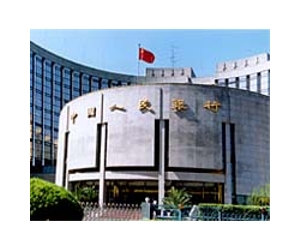
Bank of China said Tuesday it would sell a bond issue worth five billion yuan (740 million US dollars) in Hong Kong, as the city aims to be a test bed for internationalising China's currency.
The bank said it plans to issue two-year yuan-denominated bonds with an annual interest rate of 2.65 percent and three-year bonds with a 2.9 percent interest rate, with the proceeds to be used for "general corporate purposes".
The debt sale, which starts Wednesday, would be available to retail and institutional investors, the bank said in a statement
The offer is Bank of China's third in the city since China's central bank allowed Chinese financial institutions to issue yuan-denominated bonds in Hong Kong three years ago.
In August, fast food giant McDonald's said it would issue almost 30 million US dollars worth of yuan-denominated bonds in Hong Kong, the first such move by a non-financial foreign firm.
China is seeking to broaden the use of its currency in Hong Kong after approving its use to settle cross-border trade with the financial hub in 2009.
In July, central banks in China and Hong Kong signed agreements to further ease restrictions on yuan usage and its circulation in the city.
earlier related report
Singapore-Taiwan deal to draw out others: city state's PM
Taipei (AFP) Sept 7, 2010 –
Singapore's Prime Minister Lee Hsien Loong said more Asian nations will be inclined to forge trade pacts with Taiwan if it secures such a deal with his city-state first, Taiwanese media said Tuesday.
Lee, in an interview with the Taipei-based China Times, said the two sides hope to sort out details for the planned deal within "the next few months."
Taiwan and Singapore announced in July that they will hold talks later this year on a trade agreement, the first such negotiations since Taipei sealed a major trade deal with China.
"Our selling point is that if (Taiwan) has cooperation with Singapore, other countries will ponder hard: 'If Singapore is doing this, are we going to lag behind if we are not following.'"
Lee added that Singapore, a leading member of the Association of Southeast Asian Nations (ASEAN), was ahead of other nations in the bloc in signing trade deals with major economies such as the United States and Japan.
But Lee noted that the pact issue is still "sensitive" for Taiwan despite its warming ties with China.
Taiwan "has to ensure that cross-strait ties are not affected when it walks out (onto the international stage). I believe Taiwan will carefully consider this factor," Lee said, adding that Beijing is keeping an eye on the matter.
Ties between Taipei and Beijing have improved markedly since President Ma Ying-jeou became the island's president on a China-friendly platform in 2008.
Taiwan already has free trade agreements with Panama, Guatemala and Nicaragua and has been pushing to forge tie-ups with other major trading partners as it tries to avoid being marginalised.
But talks were bogged down, largely due to pressure from Beijing, which considers Taiwan part of its territory, even though the island has governed itself since the end of a civil war in 1949.
Singapore is Taiwan's sixth largest trading partner and maintains cordial ties with the island but, like most countries, officially recognises Beijing over Taipei.
Share This Article With Planet Earth
