
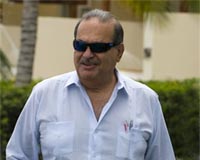
Mexican billionaire Carlos Slim, one of the world's richest men, on Thursday launched a joint 100 million dollar project which includes the largest ever private investment in Mexico's environment.
"I believe that looking after the environment will be one of the big generators of jobs in the future," said Slim, who will provide half the funding in the project with the Mexican government and the World Wildlife Fund.
"Whether there's a crisis or not, the cost of looking after the environment and reducing risks is more advisable than not doing anything," added Slim, speaking on a Caribbean beach at the launch of the alliance, a day before the UN World Environment day, hosted by Mexico.
The alliance aims to promote sustainable development in one of the world's most biodiverse countries.
Six priority regions, including northern deserts, tropical Caribbean beaches and eastern jungles — representing 30 percent of the country — are involved in the massive project, said Mexican Environment Secretary Juan Rafael Elvira Quesada.
Funding from both the public and private sectors will in future increase in the project, which will focus on conserving the biodiversity of 17 areas in the six regions, Quesada said.
Carter S. Roberts, CEO of the World Wildlife Fund, lauded the involvement of Slim — who is worth some 60 billion dollars, according to Forbes Magazine.
"It's more important beyond the money. It's the fact that the private sector, civil society and the government are working together," Roberts told AFP.
"In the developing world it's a very new model."
The world economic crisis had created an opportunity to change patterns of behavior, and the new collaboration aimed to inspire more green investments from Mexico's business community, as well as from others in emerging economies, Roberts said.
Slim, a tycoon with investments from telecoms to department stores, said the crisis had opened a chance for changing to better practices.
"I think that a pause is being created in which to revise what we're doing badly (and) what we can change," Slim said.
The selected regions for the project are the Gulf of California, the Chihuahuan desert, the Mesoamerican Reef, Oaxaca, the Monarch Butterfly Region and Chiapas, including the Lacandona Forests and El Triunfo reserve.
Share This Article With Planet Earth
