
Brazil's press and creative industry are up in arms, albeit in a sort of deferential way, over politicians' attempts to use an old draconian law from the country's dictatorial past to stifle satire before the Oct. 3 presidential election.
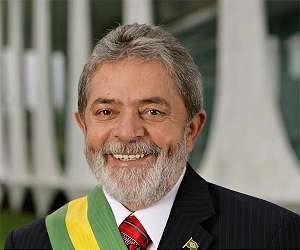
The deference comes from the god-like status enjoyed by outgoing President Luiz Inacio Lula da Silva, whose protege Dilma Rousseff appears set to win the first round and a possible run-off in late October. Lula himself is constitutionally barred from contesting a third term though has not discounted speculation that he may seek a return after Rousseff serves a term.
Reverence for Lula has already impinged on employment prospects of cartoonists and stage caricaturists. But as political campaigning heats up, funsters in the media and in the performing arts are feeling increasingly frustrated. For some, underemployment looms, and that, everyone agrees, is not funny.
Not only can cartoonists and television performers not make even the mildest fun of the candidates, whether they are winning or losing in the opinion polls, the actors, illustrators and journalists also need to tread carefully when commenting on anyone else daring to poke fun at the politicians.
Analysts said the pre-election rules of conduct for the media made Brazil unique among the world's democracies in the way they muzzled lighthearted expression.
"Do you know of any other democracy in the world with rules like this?" said Marcelo Tas, the host of a weekly television comedy show that regularly targets celebrities and politicians, in comments widely publicized amid growing discontent over the issue.
As the law comes into force, newspapers, radio and television broadcasts are legally forbidden from making political candidates subjects of satire — let alone comedy.
Defenders of the rules, dating back to Brazil's military dictatorships in the 1970s and mid-1980s, argue that the law keeps debate within bounds of decency and fair comment.
Critics said they would challenge the rules, despite risks of fines of up to $112,000 and the threat of suspension of broadcast or publishing license.
Meanwhile, ruling Workers Party candidate Rousseff, described in the media as Lula's heir, widened her lead to 11 percentage points over opposition candidate Jose Serra. That put her in position to win the first round of the October election, according to results of a poll published by the Globo network.
The economist of Bulgarian descent, former Cabinet chief to Lula da Silva, showed a commanding 43 percent in the poll, more than all her rivals combined.
Rousseff rose to 43 percent from 39 percent in a poll taken in early August. But the pollsters said she would need more than 50 percent of the vote to secure victory in the first round. Analysts said Rousseff could still secure that lead and, if not, win in the second round.
Share This Article With Planet Earth
