
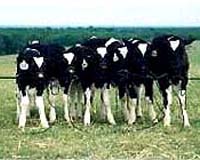
Britain's rural community is fearing a repeat of the foot and mouth epidemic six years ago, which devastated the countryside economy. The epidemic battered the farming and tourism industries, costing Britain's economy an estimated eight billion pounds (16.3 billion dollars, 11.9 billion euros). The grisly spectacle of cattle carcasses ablaze on giant pyres and dark smoke filling the air became a familiar distressing sight across the country as between 6.5 and 10 million animals were destroyed.
The outbreak caused trauma and misery for farmers already hammered by the epidemic of bovine spongiform encephalopathy (BSE or mad cow disease), and many were driven out of business.
In 2001, the rural tourism industry was blighted by the closure of pathways across open land, restrictions imposed to stop the spread of the highly infectious disease.
The army was called in to help deal with the crisis and even the general and local elections date was postponed, the first such delay since World War II.
A total of 2,026 cases of foot and mouth were confirmed the length and breadth of Great Britain between February 20 and September 30, 2001.
The first outbreak was confirmed in pigs at an abattoir in Essex, eastern England on February 20, 2001. However, the epidemic's origin was traced to a pig unit in Northumberland, north-eastern England.
By the end of March, up to 50 cases a day were being confirmed nation-wide and outbreaks occurred elsewhere in Europe.
The government decided not to vaccinate animals.
Events and sporting fixtures were cancelled and disrupted across the British Isles, including the Isle of Man TT motorcycle race, Six Nations rugby union fixtures and the Cheltenham horse racing festival.
Analysis of the viruses which spread in Britain, Northern Ireland, Ireland, the Netherlands and France showed only minor differences, suggesting that the same strain (Type O, Pan-Asia) was responsible for them all.
From Australia to Canada and across Europe, authorities laid out disinfectant mats to stop foot-and-mouth disease, while some went even further to protect zoos and domestic livestock.
It was not until January 15, 2002 that Britain was finally declared free of the disease in an announcement described as removing a "long dark shadow from the countryside."
In June 2004, simulation exercises were held in five areas to test new procedures drawn up as Britain looked to develop contingency plans that would prevent a repeat of such an epidemic.
Source: Agence France-Presse
