
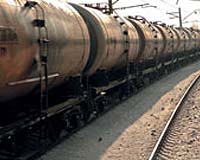
The Canadian government faces similar pressure as its U.S. counterparts to do more to ensure oil is carried on railways safely, a lawmaker said.
The Transportation Safety Board of Canada dispatched investigators to the site of a derailment of a train carrying crude oil through the village of Gogama in Ontario. The derailment is the second in the region in less than a month.
The TSB's last update was a Saturday announcement the derailment was from a train operated by Canadian National Railway Co.
Glenn Thibeault, a member of the Canadian parliament and assistant to the Ontario environment minister, said more is expected from the federal government.
The federal government, responsible for rail safety, must do more to protect our communities and the environment pic.twitter.com/XE2dgTn9go— Glenn Thibeault (@GlennThibeault) March 8, 2015
Canadian Transport Minister Lisa Raitt announced new regulations in April aimed at increasing safety on the Canadian rail system. The measure from regulator Transport Canada started with an order to remove around 5,000 tanker cars designated DOT-111 from service almost immediately.
Those types of cars were involved in the Lac-Megantic disaster and several others since the July 6, 2013 tragedy.
There was no statement from Raitt's office on the CN derailment as of Monday.
No injuries were reported in response to the latest incident. CN said a nearby bridge was damaged in the derailment, and five of the cars crashed into the river. Some of the fires tied to the crash were allowed to burn out on their own.
Fire suppression activities are beginning, as is construction of the track diversion.— CN Communications (@CN_Comm) March 8, 2015
North American crude oil production has increased to the point that it's more than the existing pipeline infrastructure can handle, leaving energy companies to rely more on rail for transport. More rail disasters involving crude oil have occurred in recent years as a result.
Two cars on a BNSF Railway line carrying oil from the Bakken reserve area in North Dakota caught fire near Galena, Ill., last week.
BNSF in a statement said the tank cars involved were newer models designated CPC-1232. The same models were involved in a February incident near Mount Carbon, W.Va.
Thibeault said via Twitter the scene of the CN crash in Ontario was "quite horrific to see firsthand."
