
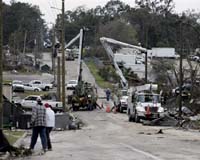
Raquel Pacheco says she is well aware of a hurricane's destructive force, yet she has done little to prepare her Miami Beach home against the potential ravages of the powerful storms which frequently batter the region.
Despite hurricane season having already started, Pacheco said storm-proofing measures like steel shutters or new windows just aren't in the budget this year.
"I might be willing to spend the money, but I have other financial priorities right now," she said, referring to her mortgage.
With the US economy near recession, Pacheco isn't alone in her decision to forego spending money on hurricane protection this year because of financial constraints.
Besides the pressure on homeowners of mortgage costs in one of the regions most devastated by the US real estate collapse, many Floridians as well have been lulled into a false sense of security because no hurricane has made landfall here since 2005.
According to a recent survey by the Mason-Dixon polling firm, more than half of Floridians and those living in Atlantic and Gulf Coast states do not have a disaster plan, while 88 percent said they haven't taken any steps in the last year to strengthen their homes against hurricane damage.
Last month Florida Governor Charlie Crist reminded residents to find room in their already strapped household budgets to at the very least stockpile emergency supplies like drinking water and food.
"People have to prioritize — we all do," said Crist during a visit to the National Hurricane Center in late May.
But building contractors that specialize in hurricane shutters and other storm-proofing said no amount of pleading from state officials is going to convince some Floridians to spend the money needed to make their homes hurricane-safe.
"The economy is hurting our business because people don't want to sign that check for a few thousands dollars to protect their house," said Evan Weber, a partner in Empire Construction and Develop Corp., which installs hurricane shutters and "impact windows," specially designed to withstand small objects hitting them at up to 225 kilometers (140 miles) per hour.
"People are worried about other things, the cost of gas and feeding their families," said Weber, though he predicted that "as soon as something starts swirling out there, Floridians are going to start freaking out."
Joe Cesarotti, general manager at Hurricane Manufacturing Corp., that his company's business is "way off," with profits from shutter sales and other hurricane prevention projects down 65 percent from this time last year.
"The memory of the last storm is fading," he said, adding that Floridians would seemingly risk foregoing new windows or protective shutters on the hope they'll remain out of harm's way for yet another season.
As cash-strapped Floridians crossed their fingers in the hopes they don't get slammed by a devastating storm, home insurers aren't willing to bet the state won't be spared.
Insurance companies have raised hurricane insurance rates by as much as 300 percent over the last few years, yet another homeowner cost that makes other protective measures prohibitively expensive for many.
"I don't see anyone else around me buying new hurricane shutters for their homes," said Pacheco, while noting the rising prices of her other household expenses.
"I have a flashlight, a radio and some food — that's all I've been doing this year."
