
China's ambassador to Australia held a rare press conference Thursday to defend his government against charges of human rights abuses, espionage and political meddling which have frayed relations between the major trade partners.
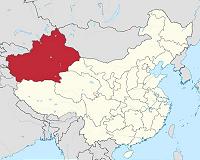
Cheng Jingye held a rare press conference at Beijing's embassy in Canberra where he rejected reports that China has detained more than a million mostly Muslim Uighurs in northwest Xinjiang region as "utterly fake news".
He also denied recent allegations from current and former security officials that China has been involved in a vast campaign of espionage and political influence in Australia, saying such charges were "not well-founded".
Australia is reliant on China for trade, by far its biggest market for critical resource and commodities exports.
Cheng pushed back on international charges that China has detained more than a million Uighurs and other mostly Muslim ethnic minorities in reeducation camps in a drive to erase their culture.
"Uighurs in detention is utterly fake news," he said, echoing Beijing's claims the facilities are vocational training schools that have breathed economic life into the poor far-west region.
He said any arrests that have been made were aimed at countering extremism.
"It's nothing to do with human rights, nothing to do with religion. It's about fighting terrorism and taking preventive actions," he said.
Relations with China have been further strained by Beijing's detention of a well-known Chinese-Australian author, Yang Hengjun, on suspicion of espionage.
Early this month Foreign Minister Marise Payne decried China's treatment of Yang as "unacceptable", saying he was not being allowed access to lawyers and had been interrogated while shackled during his 11 months in detention.
"We do not accept the allegations made by Australia's side," Cheng said.
"The relevant Chinese security department will deal with the case in accordance with Chinese law and his lawful rights are protected. In due time you will know the details."
The envoy acknowledged the rising tensions between China and Australia, saying 2019 had been "a mixed year for bilateral relations".
The press conference came barely two weeks after Prime Minister Scott Morrison launched a high-level intelligence task force to combat foreign interference in Australia — a move widely seen as targeting China.
Relations with China have been further strained by Beijing's detention of a well-known Chinese-Australian author, Yang Jun, who goes by the pen name Yang Hengjun, on suspicion of espionage.
China accounts for more than a third of Australian exports and Cheng said the bilateral trade "helped create some 640,000 jobs in this country" and was largely responsible for returning the government's budget to surplus.
"I want to emphasise the importance of pragmatic cooperation and exchange between the two countries and the benefits for both sides," he said.
Ozil cut from video game in China over Xinjiang comments
Shanghai (AFP) Dec 19, 2019 –
Arsenal midfielder Mesut Ozil has been deleted from Chinese versions of the popular Pro Evolution Soccer (PES) mobile game, the title's China distributor has said, as the fallout continued over his criticism of the country's treatment of its Uighur minority.
US-listed Chinese internet company NetEase said it removed Ozil from the game due to his "extreme comment about China."
Ozil, a German national of Turkish origin, condemned China's crackdown on Muslim minorities in the western region of Xinjiang in a tweet last Friday and criticised Muslim countries for failing to speak up about the alleged abuses.
Arsenal has distanced itself from his comments, while China said his tweets were "untruthful" and that he was "deceived by fake news".
China has faced growing international condemnation for setting up a vast network of camps in Xinjiang, where critics say Uighurs are pressured to renounce Islam, support the ruling Communist Party, and integrate with China's majority Han culture.
Rights groups and experts say more than one million Uighurs and other mostly Muslim minorities have been incarcerated, part of a long-term government response to tame years of persistent violent unrest against Beijing's control of Xinjiang.
Ozil had tweeted in Turkish: "Korans are being burnt… Mosques are being shut down… Muslim schools are being banned… Religious scholars are being killed one by one… Brothers are forcefully being sent to camps."
"The Muslims are silent. Their voice is not heard," he wrote against a blue backdrop with a white crescent moon — the flag of 'East Turkestan', the term many Uighur separatists use for Xinjiang.
Shortly afterward, NetEase announced on its verified Chinese social media accounts that Ozil's comments had "hurt the feelings of Chinese fans and violated the sport's spirit of love and peace".
"We do not understand, accept or forgive this comment."
China at first denied that the camps existed but, under growing pressure, later acknowledged them, saying they were vocational training centres.
Following his comments, Chinese state television dropped plans to broadcast the English Premier League club's match last Sunday, and discussion of the topic is now heavily censored in China.
In a similar episode, China moved in October to punish the NBA's Houston Rockets after its general manager Daryl Morey tweeted support for Hong Kong pro-democracy protesters.
Ozil has been praised on Twitter for speaking out, with US Secretary of State Mike Pompeo also weighing this week.
"China's Communist Party propaganda outlets can censor @MesutOzil1088 and @Arsenal's games all season long, but the truth will prevail," Pompeo wrote on Twitter, chastising China for its "gross" rights violations against Uighurs.
Turkey, which shares linguistic and ethnic ties with the Uighurs, has been outspoken on the issue but most Muslim-majority countries have been muted in the face of China's commercial and diplomatic power.
