
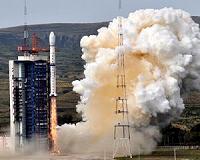
China launched a new-generation meteorological satellite, the country's first quantitative remote-sensing satellite in high orbit, Chinese media reported Wednesday.
The satellite was taken into orbit on Sunday by a Long March-3B carrier rocket, Xinhua news agency reported. According to the media outlet, Fengyun-4 is capable of monitoring atmosphere continuously, helping to improve the quality of weather forecasts and prevent catastrophic consequences of natural disasters. China has sent 14 meteorological satellites into space, of which seven are still active.
related report
Spacecraft Anomaly Delays Launch of US Next-Gen Weather Satellite
The US space agency NASA said it had to delay indefinitely the expected launch of an Atlas V rocket with the nation's most advanced weather satellite into the orbit due to a fault with the launch vehicle.
"Teams are now working a spacecraft anomaly and we will not launch right at 5:42pm [22:42GMT]," the agency tweeted, adding later it was a "launch vehicle issue."
The liftoff is scheduled to occur from Space Launch Complex 41 at Cape Canaveral Air Force Station in the southern US state of Florida. The one-hour launch window opened at 5:42 p.m. local time.
The rocket will send into orbit a NASA-built Geostationary Operational Environmental Satellite-R, or GOES-R, a next-generation geostationary satellite touted as a "game-changer" and a "life-safer" by the agency.
It will send images of weather patterns and severe storms back to earth as regularly as every five minutes. This means that forecasts will be timelier, allowing the National Weather Service to make warnings much faster, which will potentially save lives.
