
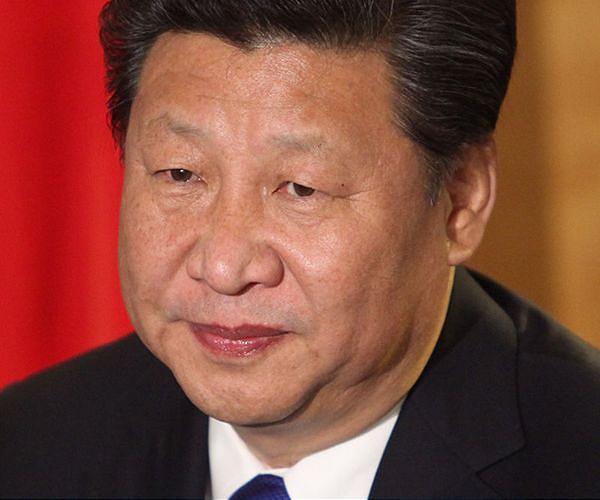
Authorities in Inner Mongolia must "solve ethnic problems" and push the use of the Mandarin language, Chinese President Xi Jinping has said, months after the region was rocked by protests over a new rule that would reduce the use of the local language.
The region in China's far north borders the independent nation of Mongolia, with which it shares ethnic, cultural and linguistic ties.
Tens of thousands took part in demonstrations and school boycotts last year after an edict mandated Mandarin replace Mongolian as the language of instruction, part of a nationwide drive to assimilate China's ethnic minorities into the majority Han culture.
Rare mass rallies, the largest Beijing had witnessed for decades, were followed by a crackdown as armoured vehicles surrounded schools and police arrested dozens of protest leaders.
On Friday, Xi doubled down on the integration policies.
Speaking at an annual convention of political leaders in Beijing, he said Inner Mongolia should "unwaveringly promote the use of national common textbooks," to correct "wrong ideas" on culture and nationality, according to a readout of the meeting in state media.
Last year, parents who refused to send their children back to school were threatened with layoffs, fines and students' expulsion. In one district, officials offered cash to students who convinced their peers to return, according to official notices.
The clampdown echoed Beijing's moves in Xinjiang and Tibet, where similar assimilation policies have been implemented.
Xi, in a nod to the unrest, said Friday that local officials should "persist in taking the correct path of solving ethnic problems with Chinese characteristics."
He said Inner Mongolians should "learn by heart that the Han ethnicity cannot be separate from ethnic minorities and that ethnic minorities cannot be separated from the Han ethnicity."
Officials should "do a good job in popularising the national common language," he said.
State broadcaster CCTV showed delegates, some in traditional Mongolian clothing, applauding Xi.
China this week opened its annual national meetings of parliament and the top political advisory body, with thousands of delegates travelling to the capital to rubber-stamp new legislation in a show of political unity.
'Nomadland' China release in doubt after nationalist backlash
Beijing (AFP) March 6, 2021 –
A nationalist backlash to Golden Globe-winning American road movie "Nomadland" has cast doubt over the film's China release after social media users and state media questioned its director Chloe Zhao's loyalty to her birth country.
Zhao became the first Asian woman in history to win the best director Golden Globe and the first woman to win best drama with the semi-fictional film, which stars Oscar winner Frances McDormand alongside a rag-tag bunch of non-actors living on the open road in the American West.
Zhao's win last week was initially celebrated in China, with state media calling the Beijing-born filmmaker a "Chinese female director" and "the pride of China."
Chinese film authorities approved the film for a domestic release on April 23 through the government-backed National Alliance of Arthouse Cinemas, the organisation announced on Monday.
But major online box office apps removed the release date from their platforms after a controversy erupted over years-old comments by Zhao, leaving the film's release in Chinese cinemas uncertain, entertainment magazine Variety reported Friday.
The NAAC did not immediately respond to AFP's request for clarification.
Social media users had dug up old media interviews with Zhao soon after her historic win in which she appeared to criticise China.
A screenshot of Zhao's 2013 interview with Filmmaker magazine, in which she reportedly called China "a place where there are lies everywhere," as well as another interview with Australian media in which she allegedly said "the US is now my country," circulated on Twitter-like Weibo last week.
The comments prompted online users to call her a "traitor" and social media in China was awash with posts questioning her nationality.
Neither quote remained on the online versions of the two interviews.
The Weibo hashtag for "Nomadland" was no longer searchable on Saturday, although discussion of the film and Zhao did not appear to be censored in any other way.
The state-owned tabloid Global Times covered the backlash, saying Zhao had made "controversial comments" a day after lauding her as "the pride of China."
But others online defended Zhao.
"She's a director, not a politician, and has never been involved in political activities, and her work has nothing to do with China," one Weibo user wrote on Saturday in defence of Zhao. "Isn't this too harsh, regardless of whether she has Chinese nationality?"
Another user agreed that China's entertainment circle was "a party venue for hypocrisy."
China's cinemas have almost returned to normal after the country successfully contained domestic Covid-19 infections, a stark contrast with theatres across the US that remain mostly shuttered as the virus continues to ravage the country.
