
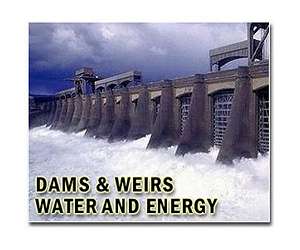
China's progress on a massive hydropower dam in Tibet has stirred debate that the project could disrupt water flows downstream and adversely affect the ecological balance of the region.
The $1.2 billion project on the Brahmaputra River will consist of six 85-megawatt generating units, for a total installed capacity of 510 megawatts, with an average annual generating capacity of more than 2.5 billion kilowatt hours. The first unit is to be operational in 2014.
China's state news agency Xinhua reported Wednesday that the formal start of construction had begun last Friday.
The world's highest river, the Brahmaputra River originates in China's Qinghai-Tibet Plateau, and flows through Bangladesh, where it is called the Jamuna.
China maintains that the hydropower station would be a "run of the river" project, which means that it would generate electricity using the natural flow and elevation drops of the river, with minimal downstream impact.
"The river flow will not be stopped during construction," said Li Chaoyi, chief engineer of the China Huaneng Group, the prime contractor for the project, Xinhua reports.
"After it becomes operational, the water will flow downstream through water turbines and sluices, thereby not affecting the downstream water levels," he said.
But if China were to divert or significantly reduce the annual flow of waters into the Brahmaputra, critics say, it could have far-reaching consequences on Indian lands downstream, with millions of Indian farmers adversely affected as less water becomes available for irrigation.
Also, the region where the dam is being built is prone to earthquakes and landslides.
"The diversified fauna and flora there have evolved over tens of millions of years and will be damaged. Blocking the river may also overturn the balance of the region's ecosystem," Wang Yongchen of Beijing's Green Earth Volunteers, told the Global Times, adding "it seems to be unworthy to build a dam while sacrificing the environment."
The Chinese government has touted the $1.2 billion project as a landmark hydropower generation scheme that would boost Tibet's development, providing it with an upgraded power capacity.
But Tashi Tsering, a Tibetan scholar of environmental policy at the University of British Columbia, has questioned Beijing's motives for such a project.
"The current push to provide Tibetans with electrical power seems primarily motivated by the need for larger hydropower projects to power resource extraction, infrastructure development and ultimately for supply to coastal Chinese cities where demands are the highest," he said in a report on his Web site in May.
Share This Article With Planet Earth
