
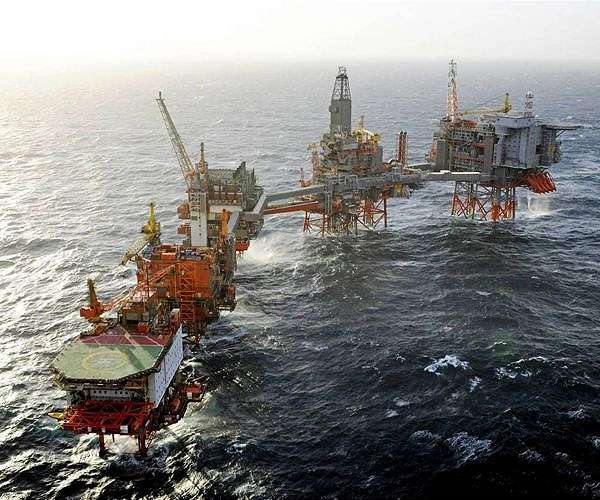
A controversial oilfield project opposed by environmentalists off the Scottish coast has been paused, operator Siccar Energy said Friday, one week after partner Royal Dutch Shell signalled its exit.
Siccar, which owns a majority 70-percent holding in the Cambo project, said in a statement it would now "evaluate next steps" in the proposed development that has been long opposed by activists.
Shell, which has the remaining stake, pulled out last week after concluding that the investment case was simply not strong enough.
The news comes after major world powers last month agreed at the COP26 climate summit in Scotland to curb the use of fossil fuels.
"Following Shell's announcement … we are in a position where the Cambo project cannot progress on the originally planned timescale," said Siccar Chief Executive Jonathan Roger.
"We are pausing the development while we evaluate next steps.
"We continue to believe Cambo is a robust project that can play an important part of the UK's energy security, providing homegrown energy supply and reducing carbon intensive imports, whilst supporting a just transition."
Cambo, which was awaiting the green light from the UK government, has been plagued by protests from environmental campaigners — and also faces opposition from Scotland's First Minister Nicola Sturgeon on climate grounds.
The news comes as energy firms face fierce pressure to switch to greener fuels, with the world moving towards net zero emissions targets.
Greenpeace welcomed Friday's decision and urged the British and Scottish governments to focus instead on investment in green jobs.
"The world's top energy experts have made it clear that we can't afford any new coal, oil or gas if we want a chance to avoid catastrophic climate change," said Greenpeace UK campaigner Sam Chetan-Welsh.
"The economics of the Cambo oilfield were looking decidedly shaky, and the climate maths never did make sense.
"Both the Westminster and Scottish government now need to end support for new oil and gas infrastructure."
Shell has vowed to achieve net-zero carbon emissions by 2050, but green campaigners have criticised the pledge over a lack of detail.
The UK government has pledged to become carbon-neutral by 2050, while COP26 urged nations to accelerate efforts to "phase out" inefficient fossil fuel subsidies and "phase down" unfiltered coal.
Separately on Friday, Shell shareholders looked set to overwhelmingly back plans to switch the oil giant's headquarters from the Netherlands to Britain after a century and drop Royal Dutch from the name.
Europe's biggest energy major says this will simplify its tax and share arrangements and quicken its transition from fossil fuels that cause climate change.
rfj/lth
ROYAL DUTCH SHELL PLC
