
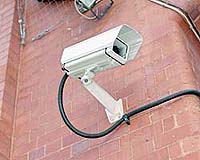
Closed-circuit television (CCTV) cameras in Britain should not be used to record people's conversations, the country's assistant information commissioner said Monday.
Speaking at the launch of a new code of conduct into use of the technology, Jonathan Bamford said eavesdropping facilities should be turned off as sound recording was "highly intrusive and unlikely to be justified."
Last April, the government announced the roll-out of "talking" CCTV cameras, whereby operators can communicate directly with people on the streets via a loudspeaker, prompting concerns about an Orwellian "Big Brother" society.
"CCTV enjoys a lot of public support and can have benefits such as helping with the detection of crime," said Bamford, whose office promotes access to official information and protects personal details.
"However, it can also be extremely intrusive, monitoring ordinary individuals as they go about their day-to-day business.
"It is essential that organisations and businesses use CCTV responsibly in order to maintain public trust and confidence in the use of CCTV and to prevent its use becoming increasingly viewed as part of the surveillance society."
An ICM poll of more than 1,000 adults for information commissioner Richard Thomas suggested seven out of 10 opposed the idea of CCTV cameras that record their conversations.
In a November 2006 report, Thomas said Britain had "sleep-walked" into a surveillance society because of the increased use of technology to monitor activities such as an individual's movements or spending habits.
There are around 4.2 million CCTV cameras in Britain — about one for every 14 people.
