
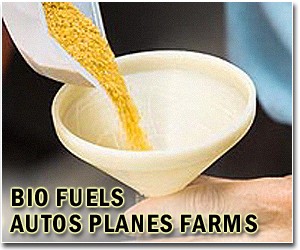
Power plants could burn more plant matter instead of coal if the fuel was delivered pre-roasted like coffee beans, British researchers say.
Researchers at the University of Leeds say many British power stations burn plant matter, or biomass, as well as coal to cut their carbon footprint, but biomass is moist and bulky, making it expensive to transport and difficult to store for long periods without going moldy, a university release said Tuesday. A roasting process known as torrefaction could solve that, scientists from the university's School of Process, Environmental and Materials Engineering say.
The process, in which plant matter is heated to about 575 degrees Fahrenheit in an air-free container, transforms bulky biomass into a dry, energy-rich fuel that is cheaper and easier to move around and has a much longer shelf life.
"If we can show that torrefaction is feasible on an industrial scale then we would hope to end up with a demonstration plant here in the United Kingdom," Leeds Professor Jenny Jones said. "We already know that many more farmers would be interested in growing energy crops on areas of poorer quality soil if the economic barriers were lowered and the power companies could use more biomass without losing out financially."
Different biomass materials could replace coal, researchers say, including energy crops such as willow and Miscanthus, a class of perennial grasses, as well as waste plant matter from forestry plantations and farms, such as branches of harvested pine trees and straw.
Share This Article With Planet Earth
