
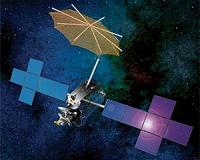
An advanced antenna reflector designed and built by Harris has been deployed in space onboard the Sirius FM-6 satellite which was designed and built by Space Systems/Loral (SSL) for SiriusXM.
The high-performance reflector has a 9-meter diameter aperture when fully deployed and delivers a high-power signal to support the delivery of commercial-free music; premier sports talk and live events; comedy; news; exclusive talk and entertainment; and the most comprehensive Latin music; sports and talk programming in radio, to SiriusXM's 25.6 million subscribers.
The reflector features a Harris-patented, gold-plated mesh reflective surface, coupled with a unique design that maximizes antenna gain and provides the improved performance required for mobile media services while reducing stowed volume and antenna mass.
During launch, the Harris reflector was stowed onboard the Sirius FM-6 satellite much like an umbrella. Once on orbit, SSL controllers executed a series of maneuvers, and sent the commands to deploy an articulating boom and then unfurl the reflector. The reflector and boom were manufactured at Harris facilities in Palm Bay, Florida.
"This continues our successful track record of working with SSL and is the fourth flawless deployment of Harris reflectors for SiriusXM," said Bill Gattle, vice president and general manager, National Programs, Harris Government Communications Systems. "The Harris reflectors help SiriusXM provide its subscribers with the best audio entertainment experience possible."
SSL designed the Sirius FM-6 satellite to help ensure SiriusXM's array of audio and data services are received by vehicles, receivers for home and business, as well as mobile devices, and will play an important role in bolstering the continuity of service for years to come.
With more than 50 reflectors in orbit, Harris is the leading supplier of large reflector apertures and deployable mesh reflector-feed antenna systems for all orbital regimes, from UHF-Band through K-Band.
Harris reflector products have the highest surface accuracy design in the industry, while substantially exceeding the specified mean mission duration of the spacecraft and payload.
A multi-camera onboard video system supplied by Ecliptic Enterprises Corporation successfully captured the 7-hour deployment sequence for the large main antenna on the Sirius FM-6 spacecraft.
Once Sirius FM-6 reached its final orbital slot, Ecliptic's space-ruggedized and miniaturized 7-camera video system was used to observe all key antenna deployment events over a two-day period starting on November 6, 2013.
This is the third successful onboard video system supplied by Ecliptic to SSL and subsequently launched, with heritage from Ecliptic's rugged RocketCam product family proven on 15 other spacecraft missions and over 100 rocket launches.
The Sirius FM-6 video system incorporates the latest in RocketCam system design, with a core avionics unit dramatically smaller and lighter-about half the size of a thick paperback novel, and 27 ounces-and yet much more capable than earlier Ecliptic video systems. Each of the cameras is about the size of a white-board marker pen, at 8 ounces each.
