
The European Commission said Thursday it supported a French effort to work to demonstrate the potential benefits of producing electricity through tidal energy.
A plant operated by British energy company EDF aims to test the potential for tidal energy. The demonstration plant in the English Channel could generate as much as 14 megawatts of energy, theoretically enough to power 14,000 average households.
"Tidal energy is one of the technologies that can contribute in the transition towards a climate friendly energy supply in Europe," Margrethe Vestager, the European commissioner in charge of competition, said in a statement. "The French project approved today will help showcase tidal energy technology, while limiting distortions of competition."
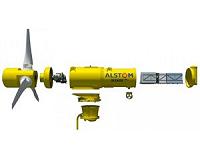
Nearly two years ago to the day, French energy company ENGIE announced plans to build a tidal energy project on the western coast of the Cotentin peninsula in the English Channel. Characterizing the pilot project as having a "limitless" energy potential, the French company said it aims to install four tidal turbines with a total generating capacity of 5.6 megawatts.
ENGIE said the region tapped for development has the strongest marine currents in Europe. The project, known by its French initials NEPTHYD, was billed as a job creator and a "steppingstone" toward determining whether or not energy projects like it are commercially viable at a potentially larger scale.
The European Commission said the EDF-operated demonstration project is part of the French effort to meet its renewable energy targets for 2030.
France has one of the least carbonized electricity sectors among members of the European Union.
French President Emmanuel Macron, meanwhile, is a staunch supporter of the push for a low-carbon economy, calling for a ban on oil and gas exploration and a phase out of the sales of new gasoline- and diesel-powered vehicles beginning in 2040.
