
Nations should be free to decide whether to arm themselves with an anti-missile shield, French President Nicolas Sarkozy said Saturday, touching on a topic of tension between the United States and Russia.
Asked by reporters if he had discussed the topic with either the Russians or the Americans on the sidelines of a G20 summit in Washington, Sarkozy, whose country holds the rotating presidency of the European Union, said: "We spoke of it with the Russians," but not with US President George W. Bush.
"Each country has the right to decide whether or not to install an anti-missile shield," Sarkozy said, citing Poland and the Czech Republic.
"It can be the final measure, in face of the threat of missiles from outside, for example from Iran," he added.
At a EU-Russia summit on Friday, Sarkozy called on Washington to stop plans to deploy anti-missile systems in Poland and the Czech Republic, and on Moscow not to put missiles into its enclave of Kaliningrad at least until 2009.
Poland and the Czech Republic reacted frostily to the comments.
"The question of the anti-missile shield is governed by an agreement between Poland and the United States. It is above all an American project," Polish Prime Minister Donald Tusk told reporters.
"I don't think that third countries, even such good friends as France, can have a particular right to express themselves on this issue."
The Czech Republic expressed surprise at Sarkozy's remarks on Friday and claimed he had overstepped his mandate by raising the US defense system.
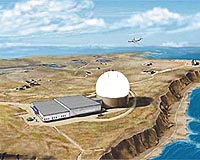
The US plans to install a radar system in the Czech Republic and 10 interceptor missiles in Poland, but insists they are not directed against Russia.
Moscow has retaliated by announcing plans to deploy missiles in Kaliningrad, its enclave on the Baltic neighbouring NATO and EU members, Poland and Lithuania.
earlier related report
Poles, Czechs brush aside Sarkozy missiles plea
Poland and the Cezch Republic reacted frostily Saturday to calls by French President Nicolas Sarkozy for the United States and Russia to halt the deployment in Europe of missile and anti-missile systems.
"President Sarkozy has expressed his own point of view," Polish Prime Minister Donald Tusk told reporters.
"It will have no impact on the future of the project."
Sarkozy had called at a European Union-Russia summit Friday on Washington to stop plans to deploy anti-missile systems in Poland and the Czech Republic and on Moscow not to put missiles into its enclave of Kaliningrad at least until 2009.
"The question of the anti-missile shield is governed by an agreement between Poland and the United States. It is above all an American project," Tusk said.
"I don't think that third countries, even such good friends as France, can have a particular right to express themselves on this issue."
In Prague former Czech president Vaclav Havel, one of the moving spirits behind his country's 1989 velvet revolution, said he was "surprised" and "uneasy" about Sarkozy's remarks.
The CTK news agency reported him as saying that when the Czech Republic joined NATO in 1999 it undertook to work "individually, bilaterally, trilaterally, in different ways" for its security.
He did not see why a defensive system should be undesirable in Europe.
The Czech Republic had expressed surprise Friday at Sarkozy's remarks and claimed he had over-stepped his mandate by raising the US defence system.
"As far as the French presidency mandate for the EU-Russia summit goes, it did not contain any mention of the US anti-missile shield," Czech Deputy Prime Minister Minister Alexandr Vondra said.
"France has never consulted such a standpoint with us," he said, and added that he was "surprised" by the French leader's declarations.
Czech lawmakers are due to vote next year on whether to host a US radar as part of the shield, amid strong public opposition to the project.
The US plans to install a radar system in the Czech Republic and 10 interceptor missiles in Poland but insists they are not directed against Russia.
Moscow has retaliated by announcing plans to deplopy missiles in Kaliningrad, its enclave on the Baltic neighbouring NATO and EU members Poland and Lithuania.
