
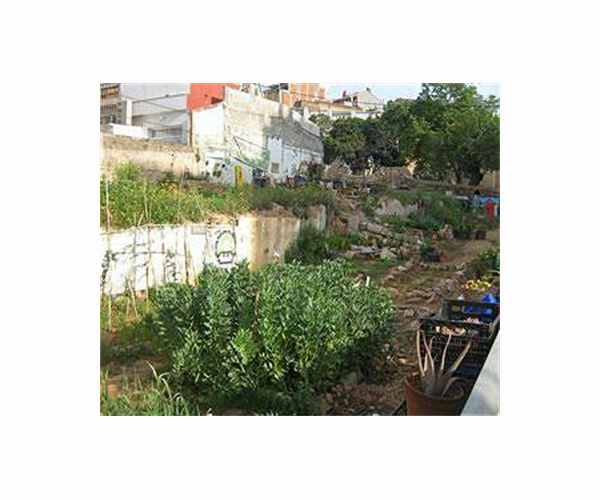
The French government announced 500 million euros on Tuesday to encourage urban vegetation projects to tackle high temperatures in towns and cities as a heatwave began to strike in the south and southwest.
"The government is going to encourage the development of cool spaces in urban areas with strong support for local authorities as they adapt to the consequences of climate change," government spokeswoman Olivia Gregoire told reporters.
A total of 500 million euros ($522 million) would be set aside for the initiative, she said.
She also called for "vigilance" as temperatures began to climb in the south and southwest of the country, which is expected to bear the full brunt of a heatwave later this week.
Peak temperatures of more than 40 degrees Celsius (104 Fahrenheit) are forecast between Thursday and Saturday, national weather forecaster Meteo France has said, with the whole of the country set to experience a hotter-than-usual spell.
"Faced with this significant, strong and early heatwave, the government calls for vigilance," Gregoire added, saying the elderly, people living on their own and the homeless were particularly at risk.
School children and teachers are also complaining about the impact of the hot weather which is coinciding with end-of-year exams for many students.
A primary school teacher in Marseille told AFP she had measured 30 degrees C in her class on Monday.
"We're facing fully south and we couldn't even open the windows to get some air in," she said.
Water use restrictions are already in place in around a third of France — and utilities are urging farmers, factories and public service providers to show "restraint" in their water use.
The spring has been exceptionally warm and dry so far, with May 2022 the warmest May since records began.
Under a 2015 law passed by parliament, all rooftops on new buildings built in commercial zones in France must either be partially covered in plants or solar panels.
Spain roasts in early heatwave
Madrid (AFP) June 14, 2022 –
Spain was grappling Tuesday with a second unusually early heatwave in less than a month as temperatures hit levels normally seen in July and August, while France began preparing for similar conditions.
Temperatures passed 40 degrees Celsius (104 Fahrenheit) in large parts of Spain, significantly higher than normal for this time of year.
Officials advised people to drink plenty of fluids and stay indoors or in the shade as much as possible.
"This early, record-breaking heatwave, coming on top of another heatwave less than a month ago… is extraordinarily worrying," said Spain's minister for ecological transition, Teresa Ribera.
Temperatures were expected to hit 43C in Cordoba in the south, 41C in Badajoz in the west and 40C in Toledo in the centre, according to meteorological agency AEMET.
On Monday the highest temperature recorded was 42.9C in the southern town of Montoro, near Cordoba.
AEMET described the risk of wildfires as "extreme" across Spain except for the northern region of Asturias and the Canary Islands in the Atlantic.
The heatwave began at the weekend and is expected to persist until at least Saturday, with temperatures between 7C and 12C higher than the average for this time of the year, said AEMET.
"It is not normal to have such an extreme heatwave at this time of the year," AEMET spokesman Ruben del Campo said.
The extreme weather, which arrived on a wave of hot air from north Africa, is headed for southwest France.
National forecaster Meteo France has warned of peak temperatures of more than 40C in the south-west between Thursday and Saturday, with the whole country set to experience a hotter-than-usual spell.
French government spokesperson Olivia Gregoire called for vigilance, warning that the elderly, people living alone and the homeless were particularly at risk.
Spain grappled with a heatwave at the end of May, with temperatures up to 15C above the seasonal average.
Last month was Spain's hottest May since the beginning of the century.
Heatwaves have become more likely due to climate change, scientists say, and are predicted to become more intense and widespread as global temperatures rise.
