
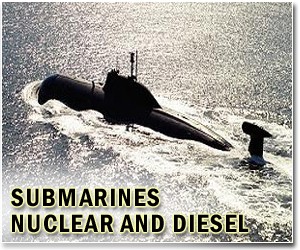
After a long and bitter acrimony, Greece and Germany's ThyssenKrupp reached agreement over an order for four submarines.
The first submarine, named Papanikolis, was commissioned for development by Howaldtswerke-Deutche Werft in Kiel, Germany, with the remaining three scheduled for construction at Greece's Hellenic Shipyards, west of Athens.
Yet shortly after the Papanikolis was built in 2001 and launched three years later, Greek navy experts determined a host of technical problems with the T-214 diesel-electric submarine. The most severe: excessive rolling in bad weather conditions when the submarine surfaced for sea keeping in high seas.
The hydraulic system was also flawed and the AIP system that supplements the submarine's diesel engines for long underwater operations faced defects.
HDW proceeded with adjustments and necessary modifications but the Greek government repeatedly refused to take delivery of the submarine, docked in Kiel since 2006.
The vessel's manufacturer accused Greece of intentionally dragging out its dispute in a bid to renegotiate the initial purchase price. The dispute triggered ThyssenKrupp to threaten cancellation of the so-called "Archimedes Project."
The group also threatened to quit its involvement in Hellenic Shipyards, a move that would spell as many as 1,400 job losses and further social discontent to austerity measures enacted this month by the new socialist government in a bid to claw out of its worst financial crisis in the country's contemporary history.
This week and after a string of negotiations, Greek Defense Minister Evangelos Venizelos announced that a resolution to the controversial deal had been found.
"We have reached a solution, which should be signed (Thursday) and which protects the interests of the Greek navy as it means it will finally receive modern, functional submarines," the minister said in a statement released over the weekend.
Venizelos didn't elaborate on details of the revised deal but media reports in Greece suggested Athens will take delivery of the Papanikolis and sell it to a third party. In exchange, ThyssenKrupp would waive its compensation claim against Greece, for breach of contract.
The other three submarines that have been ordered will be delivered to Greece.
It was not immediately clear which third nation party would be purchasing the Papanikolis after the revised deal is signed.
Submarines have a limited life span, partly because of the strain caused to their hulls by regular squeezing and release of water pressure.
Analysts expect relations between Athens and Berlin to ease the submarine dispute ruffled ties for years.
Share This Article With Planet Earth
