
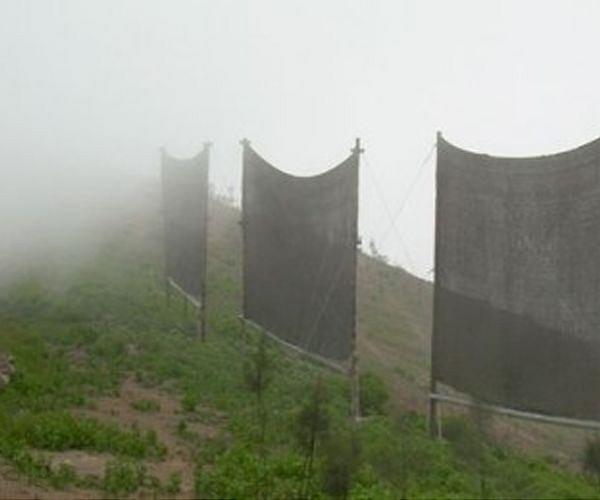
Chile's Atacama Desert, one of the driest places on Earth, receives less than 1 mm of rainfall annually. Water supplies in the region largely depend on underground reservoirs that were last replenished thousands of years ago. Now, researchers are exploring whether 'fog harvesting'-a method of collecting atmospheric moisture-could provide a sustainable water source for informal settlements in these arid landscapes.
"This research represents a notable shift in the perception of fog water use-from a rural, rather small-scale solution to a practical water resource for cities," said Dr. Virginia Carter Gamberini, an assistant professor at Universidad Mayor and first co-author of a new study published in *Frontiers in Environmental Science*. "Our findings demonstrate that fog can serve as a complementary urban water supply in drylands where climate change exacerbates water shortages."
Capturing Atmospheric Moisture
Fog harvesting systems typically use mesh panels suspended between two posts, where airborne moisture condenses into droplets that are funneled into storage tanks. This passive process requires no external energy, making it a viable alternative water source in remote or underdeveloped areas.
The research team conducted a year-long study in Alto Hospicio, a rapidly expanding municipality in the Atacama Desert. Due to rapid urbanization, approximately 10,000 residents in the area live in informal settlements, with only 1.6% connected to a formal water network. Most residents rely on trucked water deliveries. "The collection and use of water, especially from non-conventional sources such as fog water, represents a key opportunity to improve the quality of life of inhabitants," Carter said.
Their findings indicate that in a 100-square-kilometer area around Alto Hospicio, between 0.2 and 5 liters of water per square meter could be harvested daily. The most significant yields occurred at higher altitudes outside the city, with peak collection rates reaching up to 10 liters per square meter per day in August and September of 2024.
"By showcasing its potential in Alto Hospicio, one of Chile's most stigmatized yet rapidly urbanizing cities, this study lays the groundwork for broader adoption in other water-scarce urban areas," said Nathalie Verbrugghe, a researcher at Universite libre de Bruxelles and first co-author of the article. However, researchers emphasized that fog harvesting should be considered as part of a broader water management strategy rather than a standalone solution.
Mitigating Urban Water Shortages
The study suggests that harvested fog water could be used for drinking, irrigation, and small-scale agriculture. However, effective implementation would require infrastructure such as large storage tanks and distribution systems.
Based on an estimated average collection rate of 2.5 liters per square meter per day, the study determined that 17,000 square meters of mesh could generate 300,000 liters of water weekly-enough to meet the needs of urban slum dwellers. Additionally, 110 square meters of mesh could supply 100,000 liters annually for irrigating green spaces. The system could also support soil-free agriculture, producing 15 to 20 kg of leafy greens per month.
The researchers note that successful fog harvesting depends on specific environmental conditions. "Key prerequisites include fog density, suitable wind patterns, and well-oriented elevated landforms. Additionally, since fog is seasonal in many regions, this variability should be considered," said Verbrugghe. Future studies will assess the feasibility of scaling up fog harvesting in larger urban centers.
"We hope to encourage policymakers to integrate this renewable source into national water strategies," concluded Carter. "This could enhance urban resilience to climate change and rapid urbanization while improving access to clean water."
