
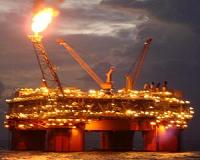
Though it passed a committee with bipartisan support, a Democratic leader in the U.S. House said efforts to expand offshore drilling show signs of "mental exhaustion."
Texas Democrats joined their Republican counterparts on the House Committee on Natural Resources in passing the so-called SECURE American Energy Act, H.R. 4239, which would expand access to drilling for oil and gas offshore and offer some support for wind energy development.
Most states bordering the Gulf of Mexico secure royalties from oil and gas operations under measures signed by President George W. Bush. The SECURE Act would expand revenue-sharing to Alaska and Atlantic states and ease presidential control over what can and can't be put off limits, a swipe at President Barack Obama's late-term push to put some offshore areas out of reach.
Rep. Raul Grijalva, an Arizona Democrat and ranking member on the committee, said the bill distributes oil and gas revenue in a way that could show favoritism.
"This bill has all the signs of mental exhaustion," he said in a statement. "Nobody outside the petro-bubble takes their [supporter's] arguments seriously any longer."
Supporters of the measure say the Obama administration put most of the territorial waters off limits to drillers. The federal government now estimates about 90 billion barrels of oil have yet to be discovered in U.S. territorial waters, and the GOP and industry leaders say more drilling could create hundreds of thousands of new jobs and generate $200 billion in revenue.
Dan Naatz, whose Independent Petroleum Association of America is one of seven industry groups supporting the measure, said H.R. 4239 was a common-sense act that "reins in bureaucratic overreach and expands offshore energy development opportunities."
"With this legislation, we can unlock our vast energy potential, advance American energy dominance and generate revenues at all levels of government," Chairman Rob Bishop, R-Utah, said in a statement.
A group of eleven environmental and conservation groups, for their part, called the SECURE Act shameful. In its own statement, ocean advocacy group Oceana said the measure would offer short-term support for the oil industry, but with long-term impacts on marine ecosystems.
First coast-to-coast land motion map of Scotland derived from satellite radar images
The first country-wide map of relative land motion has been created by a team at the University of Nottingham. Using hundreds of satellite radar images the team, working with Geomatic Ventures Limited (GVL), an innovative University spin-out company, created a complete map of mainland Scotland.
The map covers a two-year period from 2015 to 2017 and was created using Intermittent Small Base … read more
