
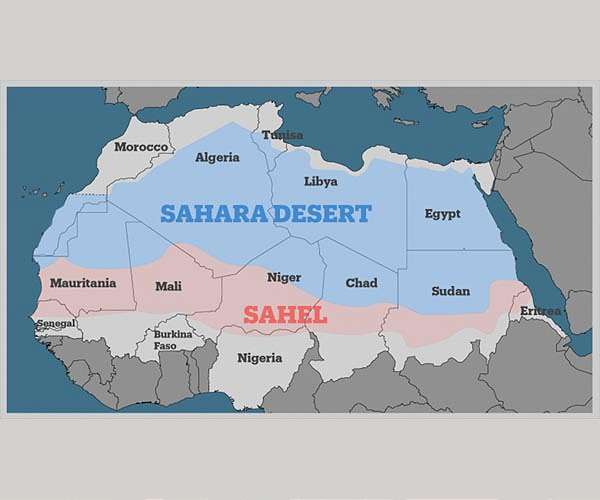
Power grabs in West Africa over the past year — in Chad, Mali and most recently Guinea — are enjoying newfound impunity, leaving citizens angry and distressed.
"What's the use of constitutions, the Economic Community of West African States (ECOWAS) and international diplomacy if after all anything goes?" asked Ahmed Sankare, a mobile telephone vendor in the Malian capital Bamako.
ECOWAS and many voices in the international community condemned the Guinea coup, as they did a year ago and again in May for Mali.
The words have been the same: restore constitutional order, free detainees, set a timeline for elections.
But a year later, Mali's military remain in command, with doubts growing over their promise to return the Sahel country to civilian rule through elections in February 2022.
In Chad, after Idriss Deby Itno died fighting rebels on April 20, his son seized power.
Former colonial power France, Chad's main trading and strategic partner, quickly gave its blessing to the new leadership, refraining from describing what took place as a coup.
In Mali as in Chad, the new presidents are the product of special forces — Colonel Assimi Goita in Bamako, General Idriss Deby in N'Djamena. And in both countries, the constitution has been replaced by a "transition charter".
– 'A favourable climate' –
"I do think that the international community has sacrificed its leverage, first by its acquiescence to the coup in Mali — the US is the only major external power to maintain a cut-off of military assistance to Bamako until constitutional order is restored," said Peter Pham, former US envoy to the Sahel.
"And then by Chad, where France led the way by literally, in the person of Macron, embracing the son of the late President who took over," he added, referring to French President Emmanuel Macron.
Jean-Herve Jezequel of the International Crisis Group (ICG) think tank warned against the idea that the coups in Mali and Chad helped trigger Guinea's putsch.
But "the way these recent coups in Chad and Mali were accepted, even validated, by regional and international actors has probably created a favourable climate for what happened in Guinea," he said.
Burkinabe news outlet Wakat Sera drew parallels between the coups in Guinea and Mali.
The new strongman in Conakry, Lieutenant Colonel Mamady Doumbouya, simply "recited the formula for power grabs through arms… like a recording that all putschists everywhere use", it argued.
– 'Domino effect' –
In Bamako, a top official, speaking on condition of anonymity, said the coups in Mali and Chad could create a "domino effect", with militaries elsewhere saying to themselves "why not us?"
In Guinea's case, "experience tells us to be extremely cautious and not too naive," Fabien Offner of Amnesty International told AFP.
"Some see the end of the (Alpha Conde) regime as a good thing, (but) it's not the first time that there are hopes in West Africa and they are often dashed," he said.
The message in the Wakat Sera editorial to the international community was clear: "Stop with the ostrich policy" and the "broken record" of toothless condemnations, it said.
Guinea: Latest in a line of African coups
Paris (AFP) Sept 6, 2021 –
As the military grab power in Guinea — the third African government to be toppled this year — we look back on a decade of coups across the continent.
– Guinea –
Elite troops led by Lieutenant-colonel Mamady Doumbouya take over the impoverished West African state on Sunday, arresting 83-year-old President Alpha Conde.
The veteran became Guinea's first democratically-elected president in 2010 after spending years in jails at the hands of previous juntas.
But last year he sparked fury by changing the constitution so he could run for a third term.
– Mali –
President Ibrahim Boubacar Keita is overthrown in August 2020 after several months of street protests in the troubled West African nation which is threatened by an Islamic insurgency.
Then in May the military takes over yet again after the civilian leaders of an interim government remove soldiers from some key posts.
Army strongman Colonel Assimi Goita survives an assassination attempt on July 20 at a Bamako mosque.
Under international pressure, the colonel vows to hold free elections by February.
– Sudan –
Dictator Omar al-Bashir's 30 years in power are terminated by the army in April 2019 after a four-month street revolt sparked by the price of bread tripling.
More than 250 people die in the protests. A transition council of military and civil society leaders is formed in August 2019 and a civilian prime minister appointed the following month.
– Zimbabwe –
Robert Mugabe, who had led the country with an iron fist for the 37 years since independence, falls in 2017.
He is ousted by the military and members of his own ZANU-PF party, who replace him with former vice president Emmerson Mnangagwa.
Mugabe dies in Singapore two years later aged 95.
– Burkina Faso –
Less than a year after the fall of president Blaise Compaore after a popular revolt, Michel Kafando is overthrown as president in a coup led by his own presidential guard in 2015.
Less than a week later Kafando is back in power after the coup leaders fail to gather support, until elections are held in November.
– Egypt –
The military ousts Egypt's first democratically-elected leader, the Islamist Mohamed Morsi, in 2013 after huge demonstrations against his one year in charge.
The general who led the bloody putsch, Abdel Fattah al-Sisi, becomes president and begins a brutal crackdown on dissent that is still going on.
– Guinea Bissau –
Troops led by General Antonio Indjai oust interim president Raimundo Pereira and former prime minister Carlos Gomes Junior between two rounds of a presidential poll in 2012.
It is the fourth coup since independence from Portugal in 1974.
