
India's navy chief resigned on Wednesday, taking "moral responsibility" for a spate of recent maritime accidents including one off Mumbai's coast earlier in the day that saw two sailors missing and seven others injured.
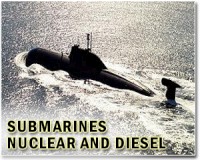
Smoke was detected aboard a Russian-built submarine in the latest accident, which came after 18 naval crew were killed last August when another fully-armed submarine exploded in flames and sank in a military shipyard in Mumbai.
"Taking moral responsibility for the accidents and incidents which have taken place during the past few months, the Chief of Naval Staff Admiral D.K. Joshi today resigned," a defence ministry statement said.
"The Government has accepted the resignation of Admiral Joshi with immediate effect."
Seven sailors suffered breathing problems after trying to contain smoke which filled the living quarters of the INS Sindhuratna during a training exercise on Wednesday, according to the navy.
They were airlifted from the submarine to hospital for treatment and navy ships were dispatched to help the vessel, said Narendra Kumar Vispute, a spokesman for the defence ministry.
"The incident took place between 6am and 7am. The crew contained the smoke but seven of them had to be airlifted by naval helicopters. They are all stable," Vispute told AFP, without elaborating on the cause of the incident.
Two crew members are still missing from the Russian-built Sindhuratna, which was still seaworthy after the incident and was returning to port in Mumbai, the navy said.
"Two personnel have not yet been located and all efforts are in progress to locate them," a statement said. "All other crew of the submarine are on board and safe. Submarine is also safe and does not have any weapons on board."
Smoke filled compartment number three, triggering the emergency closure of hatches which isolate sections of the submarine, according to the Press Trust of India (PTI).
The missing pair "might have been left in the cabin or at some other place as various cabins and compartments are isolated as part of the emergency measures", PTI quoted an unnamed navy officer as saying.
– 'Ageing fleet' –
An inquiry was underway into the cause of Wednesday's accident, which a navy spokesman blamed on sparks in the accommodation cabin.
The deadly accident in August, on the INS Sindhurakshak, was thought to be the Indian Navy's worst disaster since the sinking of a frigate by a Pakistani submarine during a war with its neighbour in 1971.
Last month a third submarine, INS Sindhughosh, ran aground while returning to Mumbai harbour. No loss of life or damage was reported.
Following Joshi's resignation, his deputy Vice Admiral R.K. Dhowan will take charge pending a new appointment, the defence ministry statement said.
The Indian navy has 14 submarines, but only between seven and nine are operational at any one time because of regular repair and refitting.
Gateway House, a Mumbai-based foreign policy think-tank, called the latest naval accident "unfortunate" and urged policy makers to pay closer attention to the Indian naval fleet.
"Delays in the acquisition of new submarines coupled with a deficient and ageing fleet of submarines are taking its toll on the operational capabilities of the Indian navy," said security expert Sameer Patil of Gateway House.
INS Sindhuratna is a kilo-class submarine which normally operates with a crew of 53 and can sail on its own for 45 days, the Indian navy website says.
The submarine had only been handed back to the navy in December after undergoing a major refit, according to local reports.
It had been undergoing exercises off the Mumbai coast as part of a clearance process for full operations when the incident occurred.
In February 2010 the Sindhurakshak suffered a fire while docked in Visakhapatnam city in southern India, killing a 24-year-old sailor.
Russia is still the biggest military supplier to India, but relations have been strained by major delays and cost overruns with a refurbished aircraft carrier, the INS Vikramaditya.
