
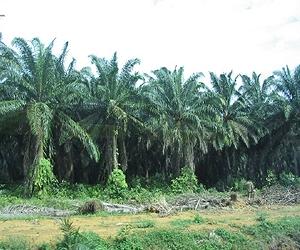
An industry body for sustainable palm oil on Thursday accused Indonesian giant Sinar Mas of breaching its principles, and warned that it could face expulsion.
Sinar Mas Agro Resources and Technology (SMART) has been struggling to repair its image after Greenpeace alleged the Indonesian firm was devastating rainforests and habitats for endangered species like orangutans.
The name-and-shame campaign by the environmental group has led several foreign buyers to cancel major contracts, but SMART said last month that an audit it had commissioned had cleared it of the charges.
In a rare public censure, the Roundtable of Sustainable Palm Oil (RSPO) — an industry group of producers, environmental groups and food companies — said it had found "serious non-compliance" on the firm's part.
"The Roundtable on Sustainable Palm Oil takes all infringements of its Code of Conduct and Principles and Criteria very seriously," the Kuala Lumpur-based RSPO said in a statement on its website.
"Members who have been found to not be in compliance and who continue to be in non-compliance with the RSPO regulations could ultimately face sanctions, including the suspension and, eventually, the termination of their membership of the RSPO."
The industry group said SMART was found to have failed to "work towards implementation and certification of the RSPO Principles and Criteria".
The RSPO was formed in 2004 to establish stringent social and environmental criteria including a ban on clearing forests in order to plant the crop.
SMART, the Indonesian palm oil unit of its Singapore-listed parent company Golden Agri Resources (GAR) and part of the Sinar Mas agri-industry empire, commissioned the audit in February after Greenpeace made the claims.
The environmental watchdog accuses SMART of widespread forest destruction, including clearing primary forests and peatland.
SMART — part of the Singapore-listed Sinar Mas agribusiness group — has said it should not be blamed for the destruction of Borneo's forests and that the allegations are "largely unfounded".
GAR has lost major clients including Unilever, Kraft and Nestle in the resulting furore.
Indonesia is the biggest producer of palm oil, which is used in everything from biscuits to cosmetics, but environmentalists say plantations are driving deforestation blamed for habitat loss and producing greenhouse gases.
earlier related report
Tiger kills palm oil farmer in Indonesia
Jakarta (AFP) Sept 23, 2010 –
A tiger attacked and killed an Indonesian man as he worked on a palm oil plantation, one of the crops blamed for stripping the big cats' habitat, an official said Thursday.
The Sumatran tiger severely mauled the 35-year-old man Tuesday in Bengkalis district of Riau province, local conservation agency head Danis Woro said.
"He was working on his palm oil plantation when a tiger suddenly appeared and attacked him," he told AFP.
The tiger devoured some of the man's organs before it was driven away the following morning, media reports said.
Human-animal conflicts are a growing problem in the archipelago, as forests are destroyed for timber or to make way for crops like palm oil, forcing animals such as tigers and elephants into closer contact with people.
There are fewer than 400 Sumatran tigers left in the wild, according to the environmental group WWF.
Last month a Sumatran tiger killed an 18-year-old rubber plantation worker, also in Riau province on Sumatra island.
Share This Article With Planet Earth
