
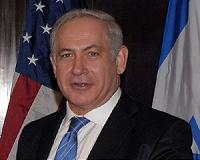
The deal to curb Iran's nuclear programme will bolster Tehran's ability to fund global terrorism by providing the Islamic state with "billions of dollars" in sanctions relief, Israeli Prime Minister Benjamin Netanyahu declared Saturday.
"Iran will get hundreds of billions of dollars from sanctions relief and investments to fuel its aggression and terrorism in the Middle East and North Africa and beyond," Netanyahu — who is bitterly opposed to the deal agreed by Iran and world powers in July — said during a visit to the Italian city of Florence.
The Israeli leader is on a tour of Italy — his first major overseas visit since being re-elected in June.
Speaking ahead of a meeting Saturday evening with his Italian counterpart Matteo Renzi he compared the threat posed by the Islamic State jihadist group with the "far more serious threat…posed by another Islamic state, the Islamic state of Iran and specifically its pursuit of nuclear weapons".
Israel was not opposed to Iran having a civilian nuclear program, he said, but the deal hammered out in the Swiss city of Lausanne would allow Tehran "to keep and extend a formidable infrastructure that is completely unnecessary for civilian nuclear purposes but is entirely necessary for the production of nuclear weapons," Netanyahu declared.
Iran denies trying to develop nuclear weapons, insisting its atomic programme is peaceful.
US will be isolated if it rejects Iran deal: UN envoy
United Nations, United States (AFP) Aug 27, 2015 –
The United States will be isolated on the world stage and its influence diminished if Congress rejects the Iran nuclear deal, the US ambassador to the United Nations has warned.
In an editorial published by Politico, Samantha Power argued that a "no" vote from Congress would make it more difficult for the United States to drum up support for sanctions and partner with like-minded countries to confront crises.
"If the United States rejects this deal, we would instantly isolate ourselves from countries that spent nearly two years working with American negotiators to hammer out its toughest provisions," Power wrote in a piece posted late Wednesday.
"We would go from a situation in which Iran is isolated to one in which the United States is isolated."
The US Congress is due to vote next month on whether to endorse the deal reached in July between Iran and six world powers — Britain, China, France, Germany, Russia and the United States.
The agreement would lift crippling UN sanctions against Tehran in exchange for curbs on Iran's nuclear program.
Power argued that rejecting the deal would undermine the US's ability to seek sanctions in other situations because it would convey an image of the United States as "a superpower intent on inflicting pain for its own sake."
The ambassador urged US senators and representatives to carefully consider the fallout of a "no" vote on US diplomacy.
"The price of our lonely walk away looks very high indeed," she said.
Even if the Republican-dominated Congress passes a resolution against the deal, President Barack Obama could still veto that move, but the administration would like to avoid such a scenario.
"If Congress rejects the deal, we will project globally an America that is internally divided, unreliable, and dismissive of the views of those with whom we built Iran's sanctions architecture in the first place," Power warned.
