
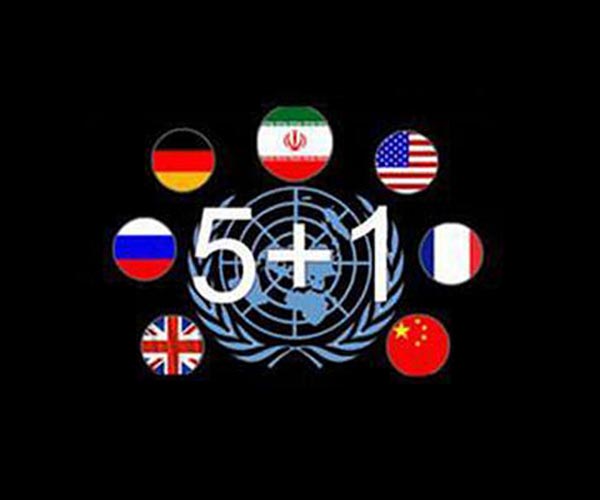
Iran and Russia united against the United States and Europe Tuesday warning on the eve of new nuclear talks that an attack on the Natanz atomic site and new EU sanctions could harm ongoing negotiations.
Iran charged Monday that its arch-enemy Israel had sabotaged its Natanz uranium enrichment plant and vowed it would take "revenge" and expand its nuclear activities.
The latest of a string of incidents to hit Iran's nuclear programme came just days after talks opened in Vienna on bringing the United States back into a troubled 2015 deal that then US president Donald Trump abandoned in 2018.
Israel, which did not claim responsibility for the sabotage, is strongly opposed to US President Joe Biden's efforts to revive the agreement.
After talks with his visiting Russian counterpart Sergei Lavrov, Iranian Foreign Mohammad Javad Zarif warned the US it would gain no extra leverage in Vienna through "acts of sabotage" and sanctions.
"The Americans should know that neither sanctions nor acts of sabotage will give them negotiation tools and these acts will only make the situation more difficult for them," Zarif told a joint news conference.
He also hit out at Israel.
"If (Israel) thought that they can stop Iran from following up on lifting sanctions from the Iranian people, then they made a very bad gamble.
"What they did in Natanz, they thought it would reduce Iran's leverage" in Vienna talks but "it makes it possible for Iran … to use any capacity it has at Natanz," he said.
Iran would make the enrichment plant "more powerful" by using advanced centrifuges, he added.
Unsourced Israeli media reports attributed the Natanz disruption to a "cyber operation" by the Israeli security services.
The New York Times, quoting unnamed US and Israeli intelligence officials, also said there had been "an Israeli role" in the attack in which an explosion had "completely destroyed" the power system that fed the plant's "underground centrifuges".
Quoting another unnamed intelligence source on Tuesday, it added an "explosive device had been smuggled" into the site and "detonated remotely," taking out primary and backup power.
The White House said the US "was not involved in any manner".
– 'Unacceptable' –
Lavrov said Moscow still expected Washington to return to the nuclear deal with Tehran, but criticised moves he said complicated the Vienna talks.
Iran and the remaining parties to the agreement have been discussing how to lift US sanctions that Trump reimposed when he quit the deal in 2018.
They have also been addressing how to bring Iran back into compliance with nuclear commitments it suspended in retaliation for the US withdrawal.
"We are counting on the fact that we will be able to save the agreement and that Washington will finally return to full and complete implementation of the corresponding UN resolution," Lavrov told the joint press conference.
He blasted the European Union for slapping sanctions on eight Iranian security officials, saying that the blacklisting threatens efforts to restore the deal.
He said: "If this decision was taken voluntarily in the midst of negotiations in Vienna to save (the agreement), then it is no longer unfortunate, it is a mistake worse than a crime.
"I hope our European colleagues understand that such actions are unacceptable and will take measures not to allow the talks to be derailed."
Lavrov's remarks come at a time of heightened tensions between Russia and the West over various issues, including Ukraine.
In response to the EU sanctions, Iran said Monday it was suspending cooperation in various fields including "terrorism, drug (trafficking) and refugees".
Zarif said Europe's "inability to implement" its nuclear deal commitments and "bowing to America's pressure" shows it is "slowly losing its relevance in international relations".
He added that Europe is not "in a superior moral position" and "has neither the reputation nor the position to sanction Iranian officials".
Iranian President Hassan Rouhani told Lavrov that Iran expects a "return to 2015's agreements and obligations."
"We are neither ready to accept anything less than that nor seek to gain anything more," he said, according to a statement on his official website.
For now, the agreement remains in limbo with neither Tehran nor Washington backing down from their positions.
Iran demands that Washington lift sanctions in exchange for its return to full compliance with commitments it has suspended, while the US demands that Tehran return to its obligations before the sanctions are lifted.
Iran's Zarif warns US against sabotage, sanctions
Tehran (AFP) April 13, 2021 –
Iran's foreign minister warned Tuesday that "acts of sabotage" and sanctions will give the United States no extra leverage in talks on reviving a troubled 2015 nuclear deal.
Mohammad Javad Zarif also blasted Israel, which Iran has accused of being behind a Sunday sabotage attack on its Natanz nuclear plant, of having made a "very bad gamble".
"We have no problem with returning to implementing our JCPOA commitments," Zarif said, referring to the deal with major powers, which Washington quit in 2018.
"But the Americans should know that neither sanctions nor acts of sabotage will give them negotiation tools and these acts will only make the situation more difficult for them," Zarif told a joint press conference with his visiting Russian counterpart Sergei Lavrov.
Iran on Monday charged that its arch-enemy Israel was behind an attack on its Natanz uranium enrichment plant and vowed it would take "revenge" and ramp up its nuclear activities.
The Atomic Energy Organization of Iran (AEOI) said a "small explosion" had hit the plant's electricity distribution centre.
Israel did not claim responsibility for the sabotage, but unsourced media reports in the country attributed it to the Israeli security services carrying out a "cyber operation".
The New York Times, quoting unnamed US and Israeli intelligence officials, also said there had been "an Israeli role" in the attack in which an explosion had "completely destroyed" the power system that fed the plant's "underground centrifuges".
The White House said Monday that the US "was not involved in any manner".
Zarif said: "If (Israel) thought that they can stop Iran from following up on lifting sanctions from the Iranian people, then they made a very bad gamble."
He said "what they did in Natanz, they thought it would reduce Iran's leverage" in the talks on bringing the US back into the deal.
"But it makes it possible for Iran to legally, legitimately, and in order to make up for this terrorist stupidity, use any capacity it has at Natanz."
He said the enrichment plant would be made "more powerful" with advanced centrifuges.
Iran's foreign ministry spokesman said Monday that the centrifuges hit by the power blackout were first-generation ones, not more advanced models banned under the nuclear deal.
The Natanz episode, the latest in a string of incidents hitting Iran's nuclear programme, came days after talks opened in Vienna on reversing former US president Donald Trump's withdrawal from the deal.
US President Joe Biden wants to revive the agreement over strong Israeli opposition, arguing that it had succeeded in sharply reducing Iran's nuclear activities in return for relief from punishing economic sanctions.
