
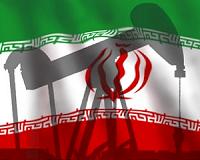
Iran is still able to get its crude oil to the international market and increase production despite souring U.S. relations, an Iranian official said Friday.
The White House is expected to hit Iran with new sanctions in response to a recent missile test after putting Tehran "on notice" earlier this week. Iran secured relief from some Western sanctions in early 2016 after the United Nations confirmed compliance with a multilateral deal that scaled back Tehran's nuclear research program.
Alaeddin Boroujerdi, the chairman of Iran's Foreign Policy and National Security Commission, said Iran was still secured by the Joint Comprehensive Plan of Action, as the nuclear agreement is called.
"Despite enemies' economic war against Iran, we were able to increase oil export from 1 million barrels per day to 2.4 million bpd by raising exploitation of oil fields," he was quoted by the official Islamic Republic News Agency as saying.
The Iranian government during the latter half of last year reached preliminary arrangements with several foreign energy companies, including some that have their main business offices in the United States. Its oil ministry this year released a list of 29 foreign oil and gas companies that are qualified to take part in any upcoming tenders for exploration and production.
Though most of those are Asian companies, the National Iranian Oil Co. said the list is a "big step" in opening Iranian oil and natural gas fields up to Western investors. Boroujerdi accused the Trump administration of widening the diplomatic gaps with some of Washington's strongest allies while boasting of Iran's growing ties with European powers.
Iran is the only member of the Organization of Petroleum Exporting Countries that has an allowance for production growth according to a deal reached last year.
Iran tensions again lift oil prices slightly
New York (UPI) Feb 3, 2017 –
Increased geopolitical tensions are adding support to crude oil prices early Friday, though the market remains highly volatile so far.
Crude oil prices moved somewhat higher earlier this week after the White House put Iran "on notice" for a recent missile test. While Iran can lean on emerging European partnerships, President Donald Trump is expected to impose new sanctions on Iran and increase tensions after a modest thaw under the previous administration.
Crude oil prices moved during the week on competing trends in the U.S. labor sector. Private payroll processor ADP reported signs of strength, though short-term figures from the U.S. government reported weakness in the four-week moving average.
For January, the Labor Department reported Friday the overall unemployment rate ticked up slightly to 4.8 percent even as the U.S. economy added 227,000 jobs.
The price for Brent crude oil was up about 0.2 percent about a half hour before the start of trading in New York to $56.68 per barrel. West Texas Intermediate, the U.S. benchmark price for oil, was up 0.25 percent to $53.66 per barrel.
Any broader market rally may depend on how investors read the January labor numbers. Gains were reported in most sectors, though hourly earnings increased by 3 cents in January, against the 6-cent increase in December.
On the energy front, an agreement from the Organization of Petroleum Exporting Countries to trim output in an effort to balance the market seems to be holding. That's competing against slow but steady increase in U.S. oil production as recovering crude oil prices improve North American economics.
The immediate focus may still be on Iran given its proximity to major crude oil export arteries. Nevertheless, that may be balanced by other macroeconomic factors and keep a limit on how high crude oil prices may go.
Olivier Jakob, managing director of Switzerland-based consultant Petromatrix, said in an emailed report that energy markets were still highly uncertain.
"There is still no defined trending momentum in crude oil," he said.
The trajectory for crude oil prices may be influenced later in the day when Baker Hughes publishes weekly data on exploration and production. Any increase would signal growing industry confidence and point to possible gains in oil supplies.
