
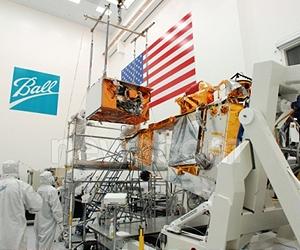
While our politicians are arguing over a FY 2011 budget that should have been passed by last September, many space programs of vital national interest are being delayed, and their futures are coming into question. One such program is NOAA's new weather satellite system known as the Joint Polar Satellite System (JPSS).
This is a civilian replacement for the canceled National Polar-orbiting Operational Environmental Satellite System (NPOESS), which was to be our next-generation satellite system to monitor Earth's weather, atmosphere, oceans, land areas and near-space environment.
NPOESS satellites were to host proven technologies and operational versions of sensors that were under operational-prototyping by NASA. The estimated launch date for the first NPOESS satellite was around 2013, but this turned out to be highly optimistic. Issues with sensor developments resulted in severe delays and cost-overruns.
This was to be a joint program of DOD, DOC and NASA, designed to replace less sophisticated weather satellites that are expected to fail over the next several years. Unfortunately, the program ended up billions over budget and 6 + years behind schedule.
NPOESS was cancelled and replaced by the simpler JPSS.
Thanks to a series of stop-gap funding bills, JPSS continues to be funded at FY 2010 levels, well below NOAA's requested budget for this year. Program officials are expecting this situation to result in another delay of at least a year.
Another roughly $2.6 billion in future spending is needed to produce the expected performance improvements for future weather forecasts. However, the House may well cut the funding significantly.
If the funding is cut, there surely will be future gaps in weather forecasting capabilities and the government will wind up spending more money later, while increasing the dangers of not being able to forecast many severe weather situations.
JPSS immediately needs $910 million to keep the program on track, but no word from congress as yet.
Share This Article With Planet Earth
