
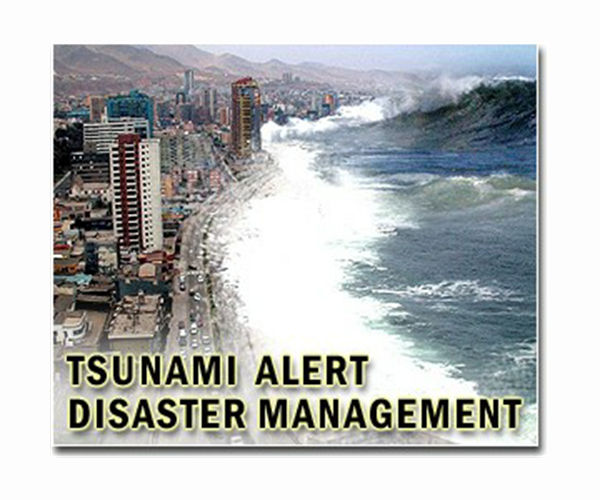
Recent instances of lake tsunamis in Alaska and British Columbia underscore a rising threat linked to climate change. These events, often initiated by landslides into small lakes, have predominantly occurred in isolated areas. However, geologist Bretwood Higman of Ground Truth Alaska warns that regions like Portage Lake near Whittier, Alaska, could soon face similar dangers in more populated locales.
"Portage Lake is pretty much at the top of my list," Higman said regarding areas at high risk for these phenomena.
Higman, speaking at the Seismological Society of America's 2024 Annual Meeting, emphasized the need for monitoring potential sites for lake tsunamis. He pointed out the significance of identifying specific seismic signals that can precede catastrophic landslides by days, enhancing early detection capabilities.
"There are some cases where there are dramatic and very distinctive precursory seismic signals that precede a catastrophic landslide, sometimes by as much as days," Highman noted. "If we could get to the point where we understood these and knew how to detect them, they could be really useful."
"Lake tsunamis are an emerging, climate-linked hazard," Higman said. He described how rising temperatures weaken the structural integrity of valley walls by melting the glaciers that support them, increasing the likelihood of landslides into bodies of water. Warming conditions are also destabilizing permafrost, crucial for slope stability above lakes.
"This is something that historically has been a pretty rare event, but in the last few years there have been a really surprising number of these," said Higman, referencing the 2020 Elliot Creek tsunami in British Columbia, which resulted from a landslide of 18 cubic million meters and a tsunami runup exceeding 100 meters.
While primarily impacting forests and salmon habitats, these incidents have spurred Higman and his team to develop strategies to mitigate the impact on areas with significant human activity and infrastructure. He also highlighted the similarity between the mechanics of these landslides and tectonic faults, suggesting potential insights into fault dynamics.
