
On Thursday, a Vega rocket will boost LISA Pathfinder into space to pave the way to a future mission for detecting gravitational waves. Once aloft, ESA's mission control teams will pace the ultra high-tech spacecraft through the critical first days of the journey to its final destination.
At 04:04 GMT (05:04 CET) on Thursday, 3 December, ESA's LISA Pathfinder is set to lift off on a 30 m-tall Vega rocket from Europe's Spaceport in Kourou, French Guiana, for a 105-minute ride into orbit.
Liftoff was previously planned for 2 December, but was delayed by one day to thoroughly check a technical issue with the launcher.
LISA Pathfinder is a demonstrator to help open up a completely new window into the Universe: it will test new technologies needed to measure gravitational waves in space. Predicted by Albert Einstein, these waves are ripples in the curvature of spacetime produced by massive celestial events, such as the merging of black holes.
Detecting gravitational waves would be an additional confirmation of General Relativity, and greatly improve our knowledge of the most powerful phenomena in the Universe.
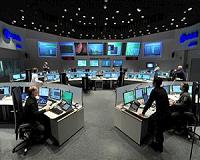
Separation from Vega is expected at 05:49 GMT (06:49 CET), marking the moment when controllers at ESA's ESOC operations centre in Darmstadt, Germany, take over the satellite.
First contact is expected two minutes later, around 05:51 GMT (06:51 CET) via the ground station at Kourou.
After confirming LISA Pathfinder's status and overall health, ground teams will start an intensive cycle of crucial and complex orbit-raising manoeuvres.
These will include firing the mission's propulsion module six times during mid-December to raise its initial orbit, before beginning a six-week cruise phase to its operational orbit some 1.5 million km from Earth in a sunward direction.
After arriving at the final working orbit, the propulsion module will be discarded in later January, and, after about three months of setting-up and calibration, the science mission will begin in March.
