
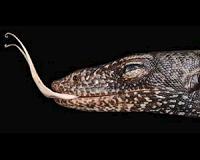
Scientists have created a variety of medicines using compounds discovered in the venoms of snakes, frogs, snails, jellyfish and other animals.
New research suggests lizard venoms could serve as an untapped source of medicinal compounds. Specifically, scientists at the University of Queensland believe lizard venoms could yield new treatments for blood clots.
Research into lizard venoms is relatively new. Until recently, biologists thought only a few lizards were venomous. But a number of new studies have revealed a surprisingly large number of venomous lizard species.
"We now know that far more lizards are venomous than previously thought, including the iconic Komodo dragon — the world's largest lizard," Bryan Fry, an assistant professor at QU, said in a news release.
Fry and his colleagues have spent much time in the lab analyzing the venoms of 16 monitor lizard species, including the Komodo dragon. Their analysis has identified a number of novel compounds with potential for use in the treatment of strokes.
"By investigating the actions of lizard venoms, we can potentially use them to disrupt life-threatening blood clots, and turn these compounds into life-saving drugs," Fry said.
Lab tests suggest monitor lizard venoms can target fibrinogen, a protein important to blood clot formation.
"It is this specialized targeting that has made similar snake venom enzymes so successful in treating blood diseases," Fry said.
Researchers detailed their analysis of monitor lizard venoms this week in the journal Toxins.
On-chip pumps achieve high-speed sorting of large cells
The sorting of individual cells is necessary for many biological applications, including the isolation of specific cell types from cell suspensions. A fluorescence-activated cell sorting (FACS) has been used for high-throughput cell sorting. In this method, lasers are used to excite auto-fluorescence or tagged-fluorescence of cell included in droplets, and then droplets are diverted into differe … read more
