
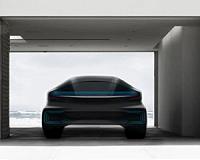
A little-known California startup with ambitions to challenge Tesla in the electric car market unveiled plans Thursday for a $1 billion manufacturing plant.
Faraday Future said on its website the investment in the facility near Las Vegas, Nevada, is a "first phase" for the new company, which is yet to get a vehicle on the road.
The facility is "something more than an ordinary 'assembly line,'" according to the statement, and will include three million square feet (280,000 square meters) "for passionate creators and diligent visionaries, where new concepts will be refined and implemented."
It will create 4,500 jobs in the region.
Based in southern California, Faraday Future has revealed little so far about its plans, or even its financial backers or resources.
Its team of about 400 includes former engineers and executives from Tesla and BMW, according to its website, which says the company "will launch with fully electric vehicles that will offer smart and seamless connectivity to the outside world."
Faraday Future plans to unveil its prototype at the Consumer Electronics Show in January in Las Vegas.
According to the research firm CB Insights, one of the investors in Faraday Future is Chinese entrepreneur Jia Yueting.
The company is named after Michael Faraday, who discovered the principles of electromagnetic induction.
In its mission statement, the company says that "today's cars do not meet today's needs."
Judge allows expansion of Uber class-action suit
San Francisco (AFP) Dec 9, 2015 –
A judge opened the door Wednesday to expanding the number of drivers who can join a class-action suit against Uber contending they are treated like employees but get no employee benefits.
US District Court Judge Edward Chen said that even those who accepted a contract that called for arbitration of disputes could join the lawsuit, saying the arbitration agreements are "unenforceable."
The ruling opens the door to as many as 160,000 Uber drivers in California who have worked for the ride-sharing service dating back to 2009.
The suit filed against Uber argues that drivers qualify as Uber employees as opposed to independent contractors and, as such, are deserving of benefits and protections called for by California labor law.
In particular, those behind the suit contend that Uber has failed to reimburse drivers for expenses or losses related to doing their jobs and has failed to pass on tips from riders.
The case is among several pending in US courts about workers in "on-demand" or "sharing economy" platforms who are considered independent contractors and get no social benefits, and contend they should be treated as employees.
Uber and its peers argue that the platforms offer far more flexibility that employees would get, and that in many cases the workers earn more.
A statement from Uber said it would appeal the latest ruling.
"Nearly 90 percent of drivers say the main reason they use Uber is because they love being their own boss," the statement said.
"Drivers use Uber on their own terms; they control their use of the app along with where and when they drive. As employees, drivers would lose the personal flexibility they value most."
