
Israeli Prime Minister Benjamin Netanyahu will meet Russian President Vladimir Putin in Moscow next week, the premier's office said, ahead of a possible US withdrawal from the Iran nuclear deal.
The Wednesday meeting will discuss "regional developments", Netanyahu's office said, and follows the Israeli leader's unveiling of "proof" of Iran's alleged past military nuclear ambitions.
A televised presentation by Netanyahu on Monday was followed by phone calls to world leaders, including to Putin, in which the two discussed the Iran nuclear deal, as well as the situation in Syria.
Israel has been accused by Syria of carrying out deadly strikes in its territory, most recently on April 9 and April 30, which killed Iranians as well as Syrian soldiers.
Putin — whose troops are backing the Syrian regime — has called on Netanyahu not to destabilise the situation further, as Israel looks to prevent Iran and its Hezbollah proxy cementing their military presence.
Russia meanwhile has reiterated its support for the Iran nuclear deal, with Putin telling Netanyahu it was "of primary importance for ensuring international stability and security" in their Monday phone call.
US President Donald Trump and his Middle East allies argue that the agreement, approved by Barack Obama, was too weak and needs to be replaced with a more permanent arrangement and supplemented by controls on Iran's missile programme.
Trump has threatened to abandon the agreement when it comes up for renewal on May 12, demanding his country's European allies "fix the terrible flaws" or he will re-impose sanctions.
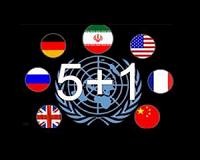
Netanyahu has repeatedly called for the accord — which Iran signed with Britain, China, France, Germany, Russia and the United States — to either be altered or scrapped.
He says the agreement does not prevent Tehran from eventually obtaining nuclear weapons and says the lifting of sanctions has increased Tehran's ability to finance proxy militants in the Middle East.
In his elaborate televised presentation, Netanyahu accused Iran of lying about its nuclear ambitions, while not providing evidence that Israel's main enemy had actively worked to obtain an atomic weapon since the 2015 agreement between Tehran and six world powers.
Iran has always denied it sought a nuclear weapon, insisting its atomic programme was for civilian purposes.
Besides Putin, Netanyahu discussed the Israeli findings and the Iran nuclear deal with his Australian, British and Indian counterparts, as well as with French President Emmanuel Macron and German Chancellor Angela Merkel.
Iran nuke deal on table as UK's Johnson heads to Washington
London (AFP) May 5, 2018 –
British Foreign Secretary Boris Johnson will on Sunday begin a two-day visit to Washington, with the Iran nuclear deal, Syria and North Korea on top of the agenda, the Foreign Office said.
Johnson will meet US Vice President Mike Pence, National Security Advisor John Bolton and Congressional foreign policy leaders.
"On so many of the world's foreign policy challenges the UK and US are in lockstep," said Johnson, highlighting the joint responses to Russian provocations, North Korea and Syria.
"The UK, US, and European partners are also united in our effort to tackle the kind of Iranian behaviour that makes the Middle East region less secure — its cyber activities, its support for groups like Hezbollah, and its dangerous missile programme," he added.
Britain remains committed the nuclear deal Iran signed with world powers in 2015, but US President Donald Trump has threatened to abandon the agreement when it comes up for renewal on May 12, calling it "insane".
Britain, France and Germany — the three European countries that signed the deal — have repeatedly tried to persuade Trump not to abandon it.
