
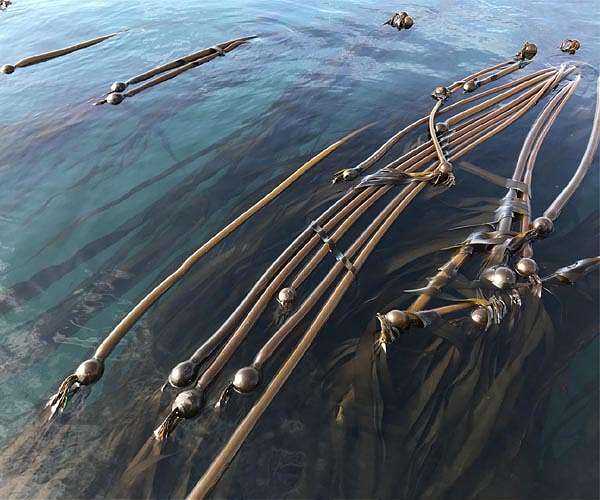
As seaweed farming garners global attention for its potential in removing atmospheric carbon dioxide and providing eco-friendly alternatives to carbon-heavy food and industrial products, significant challenges remain for its large-scale expansion. These challenges include shifting oceanic conditions, the rise of pathogenic diseases, and nutrient shortages, all of which hinder the transition from regional seaweed farming to a global carbon solution.
In a recent study published in Green Carbon, a journal by KeAi, researchers from the Qingdao Institute of Bioenergy and Bioprocess Technology (QIBEBT) at the Chinese Academy of Sciences (CAS) have demonstrated how altering the microbial life found on seaweed could help overcome these obstacles. Their research suggests that enhancing seaweed microbiomes might be the key to developing industrial-scale seaweed farming and increasing its effectiveness in combating climate change.
"A diverse community of microbes live on seaweed, much like probiotics for seaweed – specific microbes can protect seaweed from diseases, provide essential nutrients, and help them thrive in challenging conditions," explains Yongyu Zhang, the study's corresponding author. "This is particularly important as our previous study has shown that rising ocean temperatures and acidification will likely increase seaweed pathogenic diseases."
The study identifies the areas of seaweed microbiome manipulation that require attention, particularly the need for a complete understanding of the microbiome composition and the optimal timing for microbial inoculation.
"Early life stages of seaweeds, being more susceptible to microbial colonization, present a critical window for establishing beneficial microbes that might persist throughout the seaweed's life cycle," says first author Shailesh Nair. "Some seaweeds can even pass these beneficial microbes to their offspring, suggesting potential long-term benefits across generations."
The researchers also propose a framework for the future manipulation of seaweed microbiomes, which incorporates the use of advanced technologies like multi-omics, high-throughput isolation techniques, and artificial intelligence-based tools. These tools, along with rigorous validation processes, could help achieve more sustainable and productive seaweed farming.
"Microbial solutions must be deployed for sustainable macroalgae farming," adds Zhang. "By harnessing the power of beneficial microbes, farmers could potentially create more stable and productive seaweed farms, making large-scale ocean farming more feasible than ever before."
Research Report:Engineering microbiomes to enhance macroalgal health, biomass yield, and carbon sequestration
