
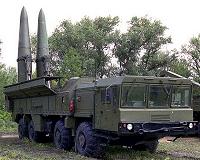
Pundits and boffins are debating how to interpret a recent sequence of North Korean missile tests, which coincide with a period of strong diplomatic engagement between North Korea and the USA.
Eyebrows were first raised in May, when North Korea tested a new type of short-range missile.
Boffins debated whether it was a nice copy of a Russian Iskander missile or an Iskander itself. Another test round in late July is believed to have used the same type of weapon.
As with any missile test, there are technical and political implications. But the political tones are more subjective, and largely in the eye of the beholder. World leaders can choose their own translation of the events, based on their perceptions and objectives.
There are strategic implications that are anything but subjective. North Korea has shown that it hasn't dropped its guard, and is hedging its bets if diplomacy fails. But that should be obvious with or without missile tests.
The technical implications of these tests are more profound, and are probably more significant than any diplomatic signals. They point to a broader strategy in North Korea's missile plans. North Korea seems to be preparing to phase out some of its older missiles and replace them with new designs.
There are sound reasons for this. Much of North Korea's missile arsenal is old and obsolete. North Korea has a large stockpile of short and medium-range missiles with an ancestry in Russia's legendary Scud family of weapons. North Korea has copied and gradually improved on the Scud to produce much of its indigenously built missiles.
The Scud family was fairly mediocre in its heyday. They look like antiques in the current age. The missiles are inaccurate and also potentially unreliable. Furthermore, they require complex handling and time to load with liquid fuels.
This makes the weapons difficult to prepare for launch at short notice. These older missiles could also find problems in dealing with modern Anti-Ballistic Missile systems, which are increasingly deployed in nearby states.
Ageing missiles are also subject to deterioration and metal fatigue, regardless of their design.
North Korea is still dabbling in the development of liquid-fueled missiles, but much of their recent work (including the latest tests) is with solid-fueled designs. These weapons are easier to store and handle.
They can also be launched quickly, as the fuel is pre-loaded. It seems probable that North Korea is preparing to introduce solid-fueled missiles across the spectrum of its arsenal, for anything from short to intercontinental range.
While these recent tests are clearly not gestures of peace, they could be mainly designed as engineering projects.
