
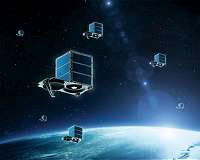
A new generation of space entrepreneurs is backing several satellite constellations of low-orbiting satellites that will provide broadband service to all areas of the world. In fact, billions of dollars are being spent in order to complete these networks in the next few years.
One of the technological advantages, not available in the late 1990s when Iridium and other large telephony constellations were developed, is the use of smaller, cheaper satellites.
New spacecraft are being mass-produced and can be launched in groups, allowing affordable on-demand, high-speed Internet connectivity everywhere. Today, we already have internet connectivity on airplanes and cruise ships. Soon, small remote villages will have connectivity.
Companies such as SpaceX, OneWeb and Boeing have proposed networks of satellites in low-Earth orbit for worldwide high-speed broadband access. SpaceX alone is going to launch 4,425 satellites. In fact, Elon Musk has already launched the first two satellites and hopes to complete the network by sometime in 2019.
Another new-generation company, OneWeb, has secured enough capital to fund construction of a satellite manufacturing plant, which is scheduled to start production this year.
Boeing has proposed a 2,900-satellite constellation that is intended to provide broadband access to both commercial and government users. In all, there will be an estimated 10,000 new satellites that will complement the already existing 1,000 satellites in near-Earth Orbits.
Assuming these constellations are actually launched, they will pose a competitive threat to the $225-billion ground-based industry that now delivers Internet access via fiber-optic cable and copper wires. Presumably, consumers will have more options at lower prices.
Today, satellite-provided broadband service is still a tiny industry with annual revenues of about $2 billion. The satellite television industry has annual revenues of about $98 billion.
These new satellite constellations could have a huge effect in remote areas of the world. As of a few years ago almost half of Earth's population lived in rural regions, where connectivity is difficult. Today, Internet access is fundamental to modern life.
