
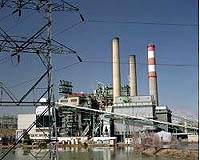
The costs that drive the rates that power customers pay have been going up dramatically, according to the new Power Capital Costs Index (PCCI) developed by IHS and Cambridge Energy Research Associates (CERA) and introduced at the CERAWeek 2008 conference in Houston.
The index shows the cost of new power plant construction in North America increased 27 percent in 12 months and 19 percent in the most recent six months, reaching a level 130 percent higher than in 2000.
The new PCCI — which tracks the costs of building coal, gas, wind and nuclear power plants indexed to year 2000 — registered 231 index points in the third quarter period ending in October, indicating a power plant that cost $1 billion in 2000 would, on average, cost $2.31 billion today.
"These costs are beginning to act as a drag on the power industry's ability to expand to meet growing North American demand, and leading to delays and postponements in the building of new power plants," said Candida Scott, lead researcher for the Capital Costs Analysis Forum for Power, a new project of CERA.
"As the cost of construction rises, firms may become reluctant to invest in new plants, or delay and postpone these projects, in turn constraining the growth of capacity."
CERA Vice President and Senior Advisor Larry Makovich said: "These cost pressures are a major strategy issue for power companies, and will affect timing and availability of new plants."
The PCCI is a proprietary measure of project cost inflation similar in concept to the Consumer Price Index (CPI). It provides a benchmark for comparing costs around the world and draws upon proprietary IHS and CERA data bases and analytic tools, as well as data from PowerAdvocate, a strategic partner in this project.
"Although the PCCI has been on an upward trend since 2000, a surge that began in 2005 has pushed costs up 76 percent in the past three years," according to Scott. "The latest increases have been driven by continued high activity levels globally, especially for nuclear plants, with continued tightness in the equipment and engineering markets, as well as historically high levels for raw materials." Excluding nuclear plants, costs have risen 79 percent since 2000, she noted.
Continuing Pressures
"The global power sector is facing heavy strains, with new builds in the Middle East and Asia, and expansions in the United States all occurring simultaneously. Nevertheless, we expect 80-110 GW of power to be built and come on-line over the next five years in the U.S. In addition, many long-lead-time items for coal and fired power plants may be contracted in the next three years."
"As a result of all of this activity, lead times for engineered equipment has increased up to 50 percent in the last 6-12 months for some items, and as expected, prices have increased," Scott added. "Overseas sourcing for many components further compounds cost pressures because, as costs of raw materials and shipping have risen, those increases are passed through to projects."
Looking forward, Scott said: "Unless there is a sudden and dramatic change in the industry, activity and market pressures should keep the PCCI at these levels, if not higher, for the next 12-18 months. After that period, there may be a re-balancing of the industry with either fewer active projects or a greater amount of delivery capacity available, or both."
Energy Industry Capital Costs
The PCCI complements the IHS/CERA Upstream Capital Costs Index (UCCI), which measures the cost of construction of new oil and gas production projects such as platforms and pipelines. Both indices demonstrate the dramatic impact rapidly rising costs are having on the energy industry.
