
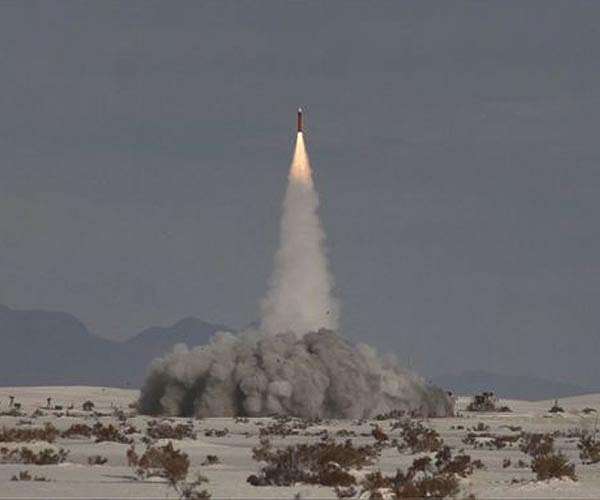
Northrop Grumman Corporation's Integrated Battle Command System (IBCS) has once again proven its robust capabilities in a recent test at White Sands Missile Range, New Mexico. The system successfully integrated data from a Lower Tier Air and Missile Defense Sensor (LTAMDS) to acquire, track, and destroy a long-range cruise missile surrogate using a PAC-3 Missile Segment Enhancement.
The IBCS continues to enhance its performance credentials with ongoing live-fire tests that underscore its vital role in transforming military strategies by integrating diverse sensors and effectors.
This latest achievement underscores IBCS's contribution to the U.S. Army's Air and Missile Defense modernization initiatives, demonstrating seamless compatibility with the LTAMDS during its ongoing development and testing phases.
Rebecca Torzone, vice president and general manager, global battle management and readiness at Northrop Grumman, emphasized the importance of this integration. "Integrating LTAMDS and Patriot into IBCS is essential for advancing integrated air and missile defense systems. IBCS is ready to serve as the linchpin in a globally connected battlespace designed to counter increasingly complex threats," she stated.
The IBCS unifies existing and future military assets across all domains, proving its versatility through compatibility with an array of defense technologies including Patriot, Sentinel, and F-35 systems, among others. Its open architecture allows for real-time data fusion, providing a comprehensive operational picture that enhances decision-making processes for military commanders.
In 2023, the full rate production of IBCS was greenlit, paving the way for deployment across U.S. Army air defense units later this year. The system also achieved initial operational capability, further cementing its readiness for deployment in critical wartime operations. Internationally, Poland has initiated the Basic Operational Capability for IBCS within their WISLA medium-range air defense program, and plans are underway for its deployment in the Defense of Guam as part of the U.S. Army's broader strategy for air and missile defense modernization.
