
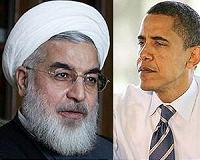
US President Barack Obama signaled Wednesday that talks with Iran on its nuclear program may need to extend beyond a weekend deadline, saying negotiations have shown a "credible way forward."
Obama said he was consulting with Congress — where there is strong criticism of his quest for a diplomatic deal with Iran — as negotiators meet in Vienna ahead of Sunday's expiration of a temporary deal.
"It's clear to me that we have made real progress in several areas and that we have a credible way forward. But as we approach a deadline under the interim deal, there are still significant gaps between the international community and Iran and we have more work to do," Obama told reporters.
"So over the next few days, we'll continue consulting with Congress and our team will continue discussions with Iran and our partners as we determine whether additional time is necessary to extend our negotiations."
– Iran has 'met its commitments' –
Iran has "met its commitments" under the interim agreement, including halting progress of its nuclear program and allowing more inspections, Obama said.
White House spokesman Josh Earnest earlier appeared to prepare the political ground for an extension of talks, saying that many people had been "pretty skeptical" about Iran but found "legitimate discussion and constructive engagement."
"It is clear that their track record over the last six months, I think many people would acknowledge, has been surprisingly favorable," Earnest said.
Israeli Prime Minister Benjamin Netanyahu has led criticism of the nuclear deal, accusing Iran of insincerity and not ruling out an attack.
US lawmakers, who are widely supportive of Israel, have threatened to ramp up sanctions without a rigorous agreement.
Senator Robert Menendez, a member of Obama's Democratic Party who chairs the Senate Foreign Relations Committee, has called for an accord that dismantles Iran's nuclear program in a way that is verifiable for 20 to 30 years.
"The fact is Iran's nuclear aspirations have been a long and deliberate process. They did not materialize overnight, and they will not end simply with a good word and a handshake We need verification," Menendez said Tuesday.
"In my view, through its history, through its actions, through its false words and deeds for decades, Iran has forgone the ability for us to shake on a deal that freezes their program."
– Hardliners on both sides –
Iran's negotiators in turn face pressure from hardliners, who view the United States as the ultimate enemy and oppose any agreement seen as a concession.
Obama was speaking after he met with Secretary of State John Kerry, who reported progress after he joined the talks in Vienna to speak with Iranian Foreign Minister Mohammad Javad Zarif.
Zarif, a member of President Hassan Rouhani's reform-minded administration, is looking for a historic agreement that would relieve Western sanctions that have severely impacted the Islamic republic's economy and perhaps start to repair Iran's fraught relationship with the United States.
Iran insists it is not seeking the atomic bomb but has stayed firm on its right to peaceful use of nuclear energy in the talks with six powers — Britain, China, France, Germany, Russia and the United States.
Under an interim agreement reached in November, Iran froze its uranium enrichment in return for about $7 billion in sanctions relief.
Tehran and Washington have pursued exhaustive talks on the nuclear deal — itself a dramatic turnaround in relations for two countries that had virtually no official communication since the aftermath of the 1979 Islamic revolution, which toppled the Western-oriented shah.
