
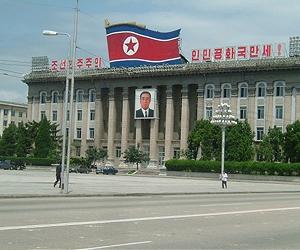
President Barack Obama said Thursday that the United States would take firm action to prevent North Korea proliferating nuclear material to other states or terror groups.
"The transfer of nuclear materials or material by North Korea to states or non-state entities would be considered a grave threat to the United States and our allies," Obama said in a speech to the Australian parliament.
"We would hold North Korea fully accountable for the consequences of such action."
The US leader said his country would "act firmly" against any proliferation activities by North Korea and vowed that Washington's commitment to neighbouring South Korea would "never waver".
The US sees Pyongyang's uranium enrichment programme, revealed last November, as a grave threat and has repeatedly urged the communist state to take "concrete steps" towards denuclearisation before six-nation disarmament talks can resume.
Officials expressed concern this week about a new domestically built light-water reactor which is soon due to start operating, saying it was a violation of UN Security Council resolutions and 2005 commitments by the North.
Talks between the US, China, Japan, Russia and both Koreas opened in 2003 and resulted in a 2005 agreement, but have stalled since December 2008.
The North quit the six-party talks in April 2009, a month before staging its second atomic test. It has since made numerous overtures about returning to the negotiating table but insists there be no preconditions.
Washington and its allies say talks cannot resume without concrete actions including the cessation of weapons development and testing, ending enrichment activity and re-admitting UN nuclear inspectors.
Obama said the US would maintain a strong presence on the Korean peninsula and China had already shown it could be a valuable "partner" in preventing proliferation and reducing tensions in the region.
"We'll seek more opportunities for cooperation with Beijing," he added.
Washington and Seoul vowed last month to raise combat-readiness against North Korean attacks after two deadly incidents last year, with South Korea warning further provocation was likely as the regime grapples with succession.
Inter-Korean ties have been tense since the South accused its neighbour of torpedoing a South Korean warship in March 2010 near the Yellow Sea border with the loss of 46 lives.
The North denied sinking the ship but shelled a border island last November, killing four South Koreans including civilians.
Seoul believes there is a "high" probability of North Korean provocation next year due to the 100th anniversary of the birth of founder Kim Il-Sung and ongoing plans for who will succeed his son, Kim Jong-Il, as leader.
US Defense Secretary Leon Panetta has said there would be no reduction in the 28,500 troop commitment to South Korea despite Pentagon spending cuts, warning that "North Korean aggression or provocation is not to be tolerated".
