
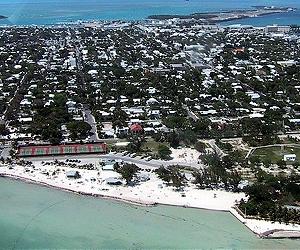
Sunkissed by Florida's generous rays, Hill and Robert Causey are ready to leave the beach and head to Key West's bars, untroubled by the nearby Gulf of Mexico oil spill.
On Duval Street, in the heart of the city, shops are offering scuba diving trips to local coral reefs, but also t-shirts cursing BP for the disastrous spill that threatens livelihoods in this tourism-dependent city.
Robert Causey, in town with his wife from the neighboring state of Georgia, headed into "Sloppy Joe's," a mandatory bar stop for vistors to Key West.
"Everybody is happy here, we don't care about the oil," he says. "You know what's worrying us?" he quips. "The beer spilled."
"Sloppy Joe's" competes with "Captain Tony," just a few meters away, over which is the bar that was favored by American writer and Nobel laureate Ernest Hemingway, who lived in the city.
The place is packed long before sundown, with live bands playing classic country and rock tunes to enthusiastic patrons.
In a month, on July 22, the bar will host its annual Hemingway lookalike contest, just one of many events held in the city to honor the American author.
"People come to Key West to party and enjoy the unique spirit of this city," says Ben Dennis, who brings tourists to the town from Miami and other places in Florida.
He says visitors are attracted by Key West's exciting history of piracy, its old ties to Cuba, the plentiful diving options and the sense of having reached a far corner of the United States, which draws motorbike riders from across the country.
Among the city's more unusual haunts is the "Garden of Eden," a bar featuring a second-floor open air terrace where customers are encouraged to imbibe their beverage of choice in the buff.
That spirit of fun has helped draw tourists to the city from far and wide, but Dennis fears that potential visitors will now be scared off by the threat of the oil spilling into the Gulf of Mexico.
"I see less people coming to Key West, probably it's the oil spill," he said.
Florida's Governor Charlie Crist has expressed fears that the state's key tourism sector will take a hit because of the spill, but the local Key West tourism office insists no effects have been seen yet.
"Nothing has changed, everything is the same as it was before the accident," said Andy Newman, stressing that the city has been unharmed by the thousands of barrels of crude pouring from beneath the wreckage of the Deepwater Horizon oil rig.
"We have not seen the first tar ball and we have not seen the first of anything from the spill," he said.
Other coastlines have not been so lucky, and in Louisiana delicate marshland habitats are clogged with thick oil, producing horrifying photos of dying animals that have been splashed across the news.
US government scientists believe that anywhere between 30,000 and 60,000 barrels of oil have gushed into the ocean each day since the spill began in late April.
The latest projections by the National Oceanic and Atmospheric Association puts the edge of the slick some 300 kilometers west of Key West, and the state has also been placed on emergency footing.
The local health department stresses there are no advisories currently in effect but that may not be enough to persuade the roughly 2.2 million tourists that come to Key West each year not to reschedule their visit.
For Toby, a local fisherman, the oil spill's potential for disaster is devastating.
"It's hard to survive in the Keys. All we got is tourism and fishing. If the oil spill comes and kills both industries, it's the end, we are grilled."
Share This Article With Planet Earth
