
While praised for its natural beauty, the island of Okinawa has never enjoyed an abundance of material assets or a robust economy. It is home to some of the longest living humans on earth, however, a fact that keeps customers interested in what is harvested and bottled in Japan's southernmost prefecture.
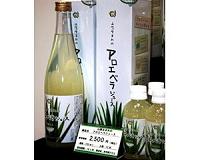
Okinawa Aloe hopes that more health-conscious folks will come around to the high-quality juices it makes on the island. Displaying its wares at the recent CareTEX 2016 expo held at Tokyo Big Sight March 16-18, company representatives dished out shot-glass sized samples of aloe vera juice to interested observers.
A medicinal plant, aloe vera contains over 200 active compounds, including vitamins, minerals, essential amino acids, enzymes, as well as polysaccharide and fatty acids. It has a track record of some 5,000 years of human use.
The first aloe vera plants were brought to Okinawa from the U.S. 20 years ago, where industrial farming has been ongoing for the last decade. Okinawa is the only location in Japan where aloe vera can be grown, notes company executive Takeshi Wakugawa. He adds that his juice is 99.8% pure, contains no artificial ingredients, and can be kept for long prolonged periods at room temperature.
"It's especially good for people with joint pains and digestive disorders," he said, noting aloe vera's anti-inflammatory qualities, and its use in cleansing the digestive tract. The plant has been used as a natural treatment for irritable bowel syndrome and acid reflux.
The company aims to sell 30,000 to 40,000 bottles per year, distributing most to the Kanto Area region surrounding Tokyo. A 720ml bottle retails for 2,500 yen.
Okinawa Aloe representatives were also busy offering samples of juice made from the shikuwasa, a citrus native to the island. Low-calorie, low-sugar, and vitamin-rich, the tart citrus is most often used by mainland Japanese as a condiment for sashimi, fried food, meat and fish.
"Usually we'd dilute this stuff before drinking it!" said one middle-aged woman, wincing as she slugged down a thumb-size portion of the juice. "It's incredibly sour!"
One 500ml bottle holds the juice of 60-80 shikuwasa, retailing for 1800 yen. "The taste is 'aggressive' so to speak, but shikuwasa finds appreciation among the elderly, as it is great for high blood pressure and diabetes," says Mr. Wakugawa.
"Usually we'd dilute this stuff before drinking it!" said one middle-aged woman, wincing as she slugged down a thumb-size portion of the juice. "It's incredibly sour!"
