
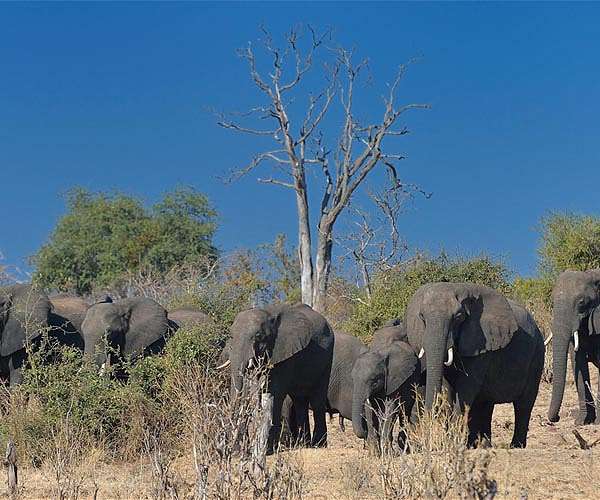
Older male elephants, or bulls, are vitally important to all-male elephant groups, according to a new study, leading migrations and helping younger bulls find food and water.
The research, published Thursday in the journal Scientific Reports, undermines the rationale of trophy hunters who target older males, claiming the bulls are "redundant" in terms of breeding and population health.
Previous studies have shown that older bulls are actually the prime breeders in most elephant groups, siring the majority of offspring. Now, researchers have shown older bulls also occupy important leadership positions within elephant societies.
"Our findings suggest that killing them could have detrimental effects on wider elephant society through loss of leaders who help young, newly independent males navigate in unfamiliar, risky environments," lead study author Connie Allen, doctoral student at the University of Exeter's Center for Research in Animal Behavior, said in a news release.
Pre-adolescent male elephants belong to female-led herds, but between the ages of 10 and 20, bulls leave their closest relatives and join all-male groups.
For the study, researchers studied several all-male groups of African savannah elephants, or bush elephants, in Botswana, documenting the prevalence of leadership behavior among different age cohorts.
The analysis showed older males were more likely to walk at the front of traveling groups.
"Research on benefits of older individuals in long-lived social mammals has largely focused on females in matrilineal societies where, for example, older female elephants are most effective at making decisions crucial to herd survival, and old post-reproductive female killer whales lead collective movements in hunting grounds," said study co-author Darren Croft.
"In contrast, less is known about the role of older males as leaders in long-lived social species," said Croft, professor of animal behavior at the University of Exeter.
The latest findings suggest just as older females are vital to healthy, well-functioning breeding herds, older males are essential to all-male groups.
Poaching and hunting remain a serious threat to Africa's elephant populations, with older male elephants numbers declining most rapidly. Hunters often target older bulls for their large tusks.
Recently, Botswana's government legalized elephant trophy hunting. So far, export quotas for the tusks of 400 elephants have been issued.
"The intricacies of male elephant societies have often been ignored in management and conservation decisions with the underlying assumption that once they leave their herd they are solitary and independent," said Kate Evans, director of Elephants for Africa and a member of the Gothenburg Global Biodiversity Center.
"This study furthers our understanding of male elephants and the importance of older bulls, enabling more sustainable management decisions for both male and female elephants to be made," Evans said.
