
Poland's prime minister on Thursday accused Europeans of making a potentially historic mistake by seeking greater ties with China, in a clear reference to French President Emmanuel Macron, as he warned of consequences for Ukraine.
"Short-sightedly they look to China to be able to sell more EU products there at huge geopolitical costs, making us more dependent on China and not less," Prime Minister Mateusz Morawiecki said on a visit to Washington.
"Some European countries are trying to make with China the same mistake which was made with Russia — this dramatic mistake," he said at the Atlantic Council think tank.
Paraphrasing Macron's remarks without naming him, Morawiecki said, "You cannot protect Ukraine today and tomorrow by saying Taiwan is not your business."
"I think that, God forbid, if Ukraine falls, if Ukraine gets conquered, the next day China may attack — can attack — Taiwan," he said.
Alluding to Macron's comments alongside President Xi Jinping about a more multipolar role, Morawiecki scoffed.
"European autonomy sounds fancy, doesn't it? But it means shifting the center of European gravity towards China and severing the ties with the US," he said.
"I do not quite understand the concept of strategic autonomy if it means de facto shooting into our own knee."
Macron visited China last week with a major French business delegation and European Commission chief Ursula von der Leyen.
Macron urged Xi not to send weapons to Russia but also said that France would not be a mere "follower" of either Washington or Beijing when it comes to growing tensions over Taiwan.
The French leader said bluntly that Europeans could not credibly promise to support Taiwan as they had not solved the Ukraine crisis.
China launched military exercises near Taiwan, a self-ruling democracy it claims, shortly after Macron left, with Beijing angry over Taiwanese President Tsai Ing-wen's meeting in California with US House Speaker Kevin McCarthy.
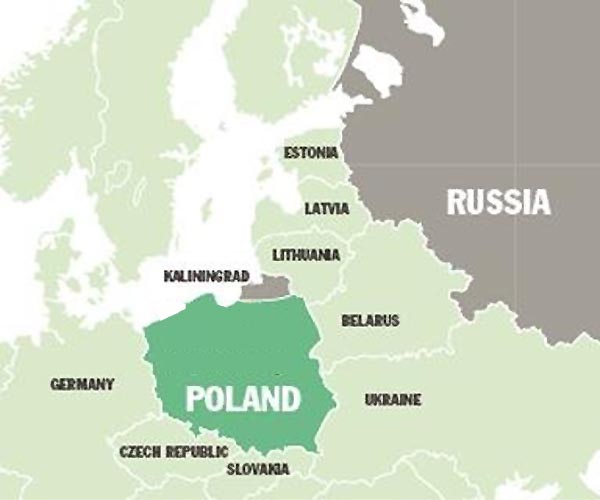
Poland, where memories remain raw both of Soviet domination and Nazi Germany, has taken a leading role in supporting neighboring Ukraine since Russia invaded in February 2022, including by sending MiG-29 fighter jets.
Morawiecki, in a barely concealed allusion to both Germany and France, accused Western European powers of providing weaker support for Ukraine than the United States, Britain and the bulk of Eastern and Central Europe with the exception of Hungary.
Western European nations have grown accustomed to a model based on cheap energy from Russia, high-margin trade with China, low-cost labor from Eastern Europe and "security for free from the United States," Morawiecki said.
"Now their modus vivendi collapsed in ruins so what do they do? They want a quick ceasefire, armistice, in Ukraine, almost at any price," he said.
Some politicians in Western Europe are thinking, "'Ukraine, why are you fighting so bravely?'" he said.
Germany and France have both provided military support to Ukraine including by sending armored vehicles — a decision that Berlin made after prolonged debate.
Macron's China remarks exasperate EU allies
Brussels (AFP) April 13, 2023 –
French President Emmanuel Macron's recent trip to Beijing was billed as a chance to showcase European unity and persuade Chinese leader Xi Jinping to help rein in Russian aggression.
But remarks that Macron made to journalists on his way home about the three-way relationship between China, Europe and the United States did more to rile his EU partners.
In an interview with French daily Les Echos and news platform Politico, Macron warned against Europe being dragged into a conflict between Washington and Beijing.
If the stand-off over Taiwan accelerates, he said, Europe might not have the time nor the resources to build the "strategic autonomy" to act without US leadership that France seeks.
Then, European Union members would "become vassals, whereas we can be the third pole if we have a few years to build it."
The Chinese government was delighted by its guest's remarks. Brussels diplomats less so.
"The French president speaks always for the French Republic," a senior EU official told reporters. "If the German Chancellor says something does also everybody say this is the policy of the European Union?"
Since the interview was published last weekend, French diplomats have scambled to insist that Europe becoming a "third pole" does not mean seeking equidistance between an American democratic ally and an autocratic Chinese rival.
But Macron's warning against subordination to US interests, along with the perception — rejected by Paris — that he was suggesting that Europe should not stand up to China over Taiwan, annoyed many EU partners.
– 'Begging dictators' –
EU members from the east of the bloc have long been wary of Europe escaping Washington's embrace, seen as their key security guarantee against Russian aggression and as Ukraine's most important defence.
Poland's Prime Minister Mateusz Morawiecki, on a visit to Washington, slammed fellow EU leaders like Macron, and before him Germany's Chancellor Olaf Scholz, for seeking trade contracts in Beijing.
"Short-sightedly they look to China to be able sell more EU products there at huge geopolitical costs," he said.
"Hence, I don't understand the concept of European strategic autonomy if it means the fact of shooting ourselves in our own knee."
Lithuania's foreign minister, Gabrielius Landsbergis was scathing about the argument that Europe can persuade Xi to intercede with Russia's President Vladimir Putin to de-escalate Moscow's war in Ukraine.
"I propose we recognise the benefits and necessity of trans-Atlantic unity … I don't suggest begging for dictators to help secure peace in Europe," he tweeted.
The negative reaction in EU countries on Russia's borders was perhaps to be expected, and Macron has never been shy of making provocative statements to stir debate on the future of European strategy.
But traditional French partners in western Europe were also sceptical of his diplomatic freelancing.
German Defence Minister Boris Pistorius said: "We have never been in danger of becoming or being a vassal of the United States."
"I found this comment unfortunate but I think the Elysee has corrected it somewhat," he told ZDF television.
Shortly after his return to Europe from China, Macron set off on a state visit to the Netherlands while debate still raged over his comments.
His host, Prime Minister Mark Rutte, was careful not to criticise his guest, but said "the US is indispensable and without that support it is inconceivable that Ukraine could have withstood the waves of violence of the past year."
In Brussels there is regret that Macron's comments have overshadowed the efforts of European Commission president Ursula von der Leyen to coordinate an EU stance on China.
Before setting off to accompany Macron on his Beijing visit, von der Leyen made a well-received speech on the need for the EU to "de-risk" itself from dependence on China while not "de-coupling" from its huge market.
But she was seen to have received a cold shoulder in China while Macron hogged the headlines.
The president of the European Council, Charles Michel, took to the airwaves to defend — and to try to explain — Macron's stance and Europe's strategic ambitions.
"On strategic autonomy, there's much more support than there was a few years ago," he told French television.
– Allies' concerns –
The bond between Washington and Brussels were threatened during former president Donald Trump's term, as the US leader cosied up to Putin and threatened to quit NATO.
This focused European minds on the need to shore up their own defences, for a while, but when Russia invaded Ukraine Washington's military aid to Kyiv far surpassed the EU contribution.
Even supporters of a stronger united European geopolitical role, like centre-right French MEP Arnaud Danjean, fault Macron for pushing on without taking into account allies' concerns.
While the idea that Europe should be better able to stand on its own two feet is accepted, any suggestion that the allies should distance themselves from the US before building up their own forces is unrealistic.
"We struggle to convince our partners essentially because we put the cart before the horse," he tweeted.
"Without first focusing on developing the means of autonomy, making grand declarations by presenting it as a given can only irritate."
