
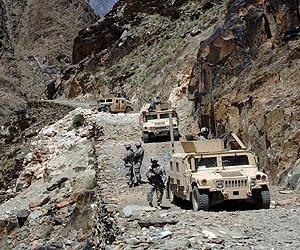
The best way to reduce the improvised explosive device threat in Afghanistan, the leading cause of death for troops there, is through the political process, as was the case in Iraq, a top US military officer said Monday.
"The political reconciliation in Iraq was a major factor in reducing the IED threat. I do believe that's possible in Afghanistan although we're nowhere near where we need to be in that regard," said Lieutenant General Michael Oates, who heads a Pentagon unit to counter those threats.
"Removing a significant sense of motivation for implanting IEDs is a major component," he told reporters at the Foreign Press Center in Washington.
Training local forces, providing equipment and using explosive detection dog units was an essential part of the effort, he added.
Some 1,200 incidents related to IEDs or other small-scale landmines that explode or are discovered before they detonate are reported each month in Afghanistan, compared to 4,000 in Iraq at the height of the conflict there.
With this year being the deadliest for international coalition forces, IEDs have caused nearly 60 percent of the casualties. According to a tally kept by the independent icasualties.org website, 680 foreign troops have been killed in Afghanistan so far this year, including 469 US fighters.
Although in Iraq the bombs were made of military-grade explosives and often remotely controlled, the IEDs being laid in Afghanistan are more rudimentary and are more difficult to detect, Oates said.
"Military-grade munitions are harder to get in Afghanistan. Most of the Soviet material that was left over is unstable and there is an abundance of fertilizer available for use as homemade explosive," Oates explained.
"It's easier and it works so there's no reason to change that motto. When you start using sophisticated detonation systems, you require a degree of education and training that may not be readily available in Afghanistan," he said.
Troops are then left looking for fertilizer-based bombs that have low or no metallic content and are buried in unpaved, dirt roads, making them extremely tough to find.
Under pressure from international allies, Afghan President Hamid Karzai in December 2009 prohibited the importation or use of fertilizers containing ammonium nitrate, an ingredient of the weapons.
Border controls on the Pakistan frontier have also been strengthened, he added, saying the Pentagon believed that using both approaches "is going to have an impact" on containing the insurgents' strategy.
Share This Article With Planet Earth
