
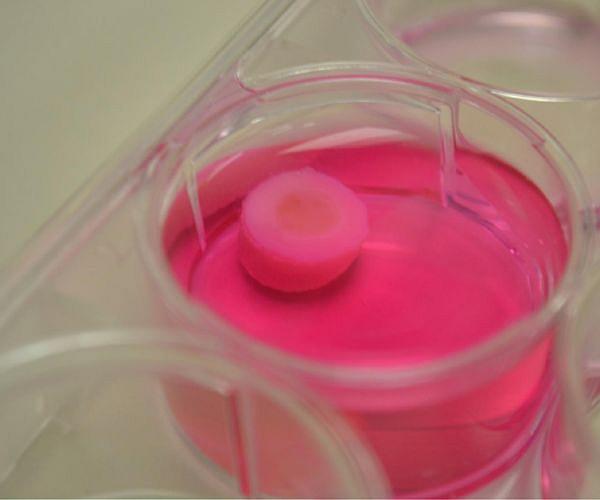
In a pioneering effort to understand the effects of weightlessness on astronauts' cardiovascular systems, a 3D-bioprinted model blood vessel has been developed. This innovation is poised to shed light on the significant changes experienced by astronauts' cardiovascular systems in the absence of gravity, including altered blood flow, increased blood clot risks, and heart shape modifications towards a more spherical form.
Benedetto Caracci, a biomedical engineering student from the University of Pavia and intern at ESA's ESTEC technical center, spearheads this ESA-endorsed project named 'Special'. The project aims to explore SPacE CondItions on ArteriaL biology using a bioprinted vessel model. Caracci detailed the creation process, highlighting the use of sodium alginate and gelatine as bio-ink and a calcium chloride bath to support the structure during printing. The adoption of the FRESH (freeform reversible embedding of suspended hydrogels) 3D bioprinting technique ensures the maintenance of the structure's desired shape post-extrusion by providing temporary support that is later removed.
The bioprinted vessels undergo rigorous testing, including micro-CT scans for dimension, porosity, and material distribution analysis; strength and elasticity assessments through tensile tests and dynamic mechanical analysis; and fluid dynamics evaluations with a blood-analogous liquid.
Further examinations will take place in ESA's Life Support and Physical Sciences Instrumentation Laboratory using Random Positioning Machines to simulate weightlessness and assess structural and functional changes. The models will also experience hypergravity conditions in the lab's Large Diameter Centrifuge.
This research not only promises to advance our understanding of vascular health in space but also lays the groundwork for utilizing the FRESH 3D bioprinting technique in drug effectiveness testing and vascular disease treatments both on Earth and in space environments.
