
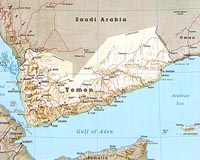
Militant attacks on oil facilities in Yemen are hurting the country's ability to build a strong economic base, the International Monetary Fund said.
The IMF said it approved a $552.9 million credit to Yemen to help the country maintain a level of economic stability. The amount is available in semi-annual disbursements, though the IMF's executive board said $73.8 million was unleashed immediately.
Yemen has struggled to sustain a level of political stability and national security since the Arab Spring in 2011 led to the resignation of longtime President Ali Abdullah Saleh. The current administration of President Abd Rabbuh Mansur Hadi is under pressure from the Houthi movement, a Shiite militia.
Naoyuki Shinohara, acting chairman of the IMF board, said national security challenges are in the way of Yemen's economic growth.
"In particular, fiscal and external balances have weakened due to delays in key reforms and increased sabotage of oil facilities," he said in a statement Tuesday.
The Yemeni government has said militants have tried to use attacks on oil infrastructure as a way to bargain for more revenue sharing.
Yemen relies heavily on oil revenue to support its economy. A 100,000-barrel-per-day pipeline to the Ras Isa export terminal has been the frequent target of attacks by groups loyal to al-Qaida.
